VisibLL
High school students explore the (in)visible multilingualism of the Viennese ‚Linguistic Landscape‘
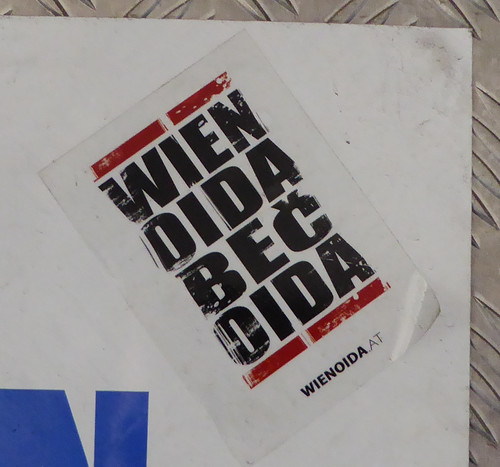
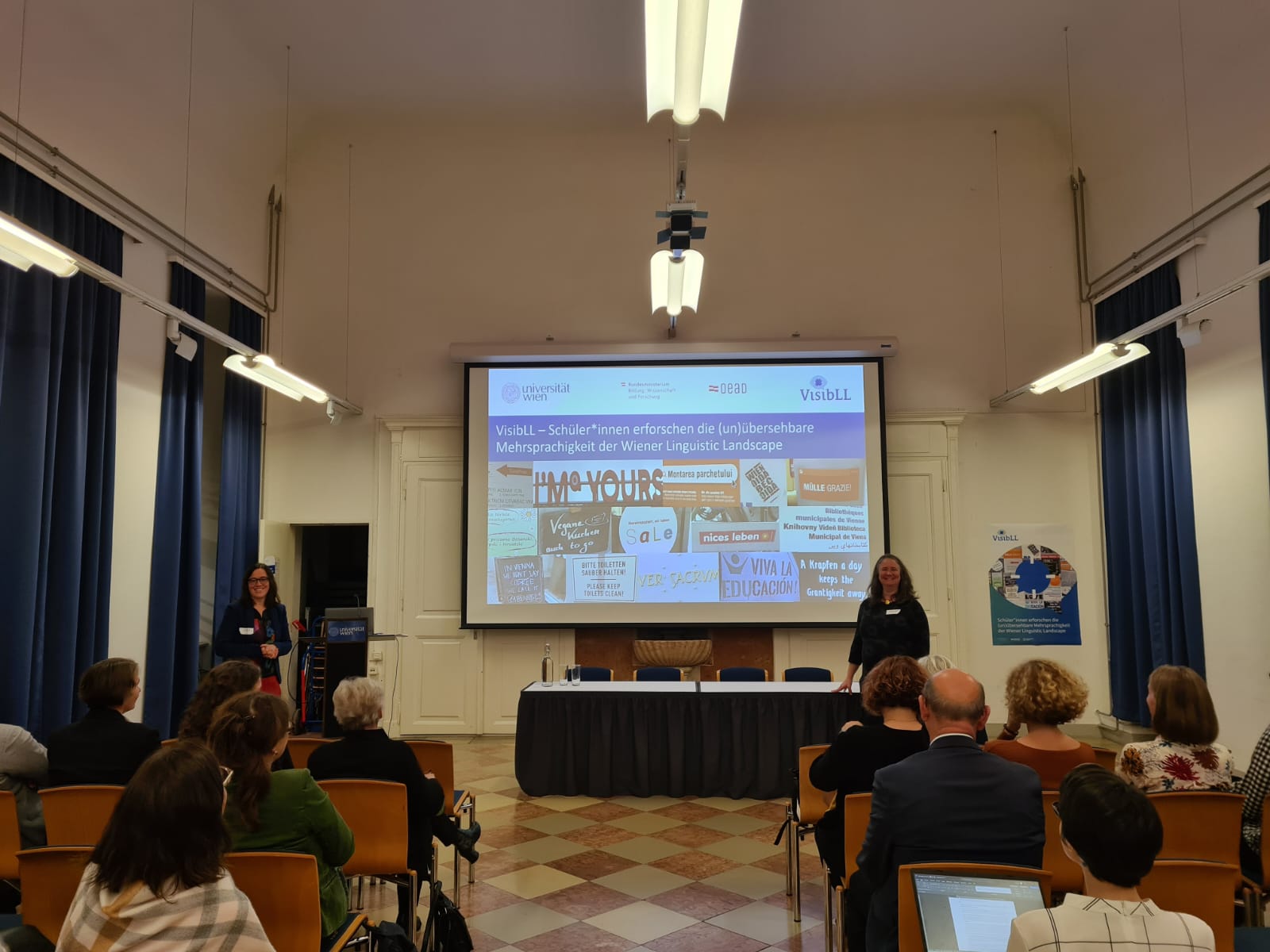
Shop, Café, Döner – anyone walking through Vienna will encounter shop signs and advertising posters in more than 100 languages. The diverse body of signs that populate public space and are almost impossible to ignore form the city's ‘linguistic landscape’. They help with orientation, point out regulations, memorialize the past, and encourage us to shop. At the same time, they reveal the role that the languages used for these purposes play in our everyday lives. Which languages are frequently visible, and which are not? What are particular languages used for, and how do we even recognize which language it is? Who determines what is displayed, and what effect does this have on those who see the signs? These are the central questions addressed by the project “VisibLL”.
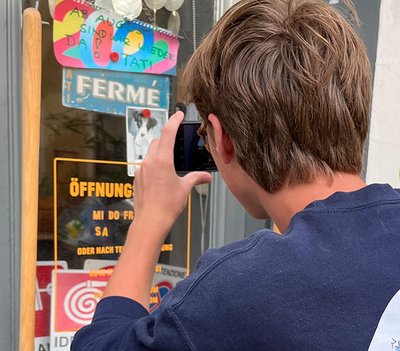
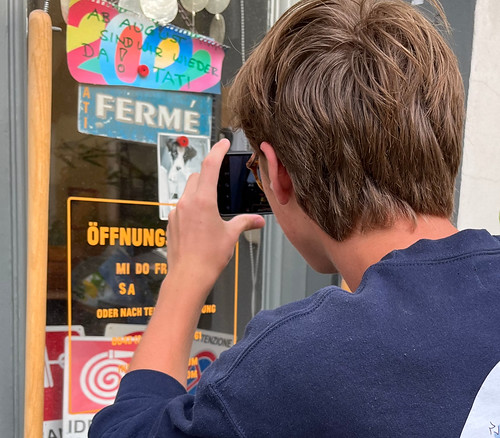
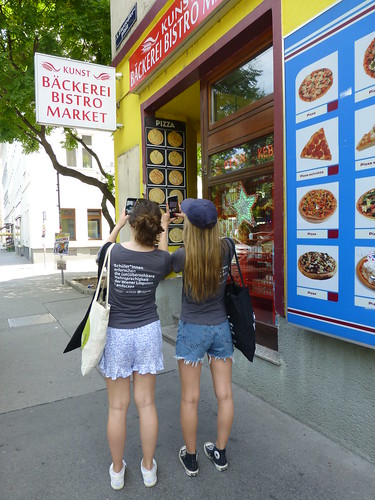
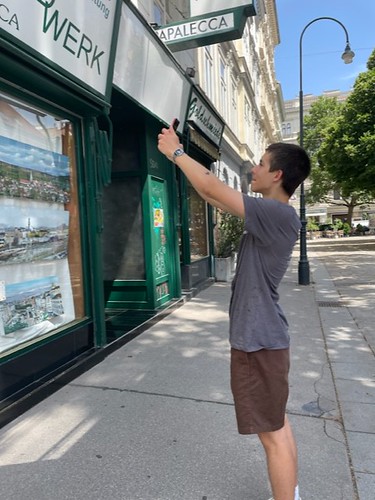
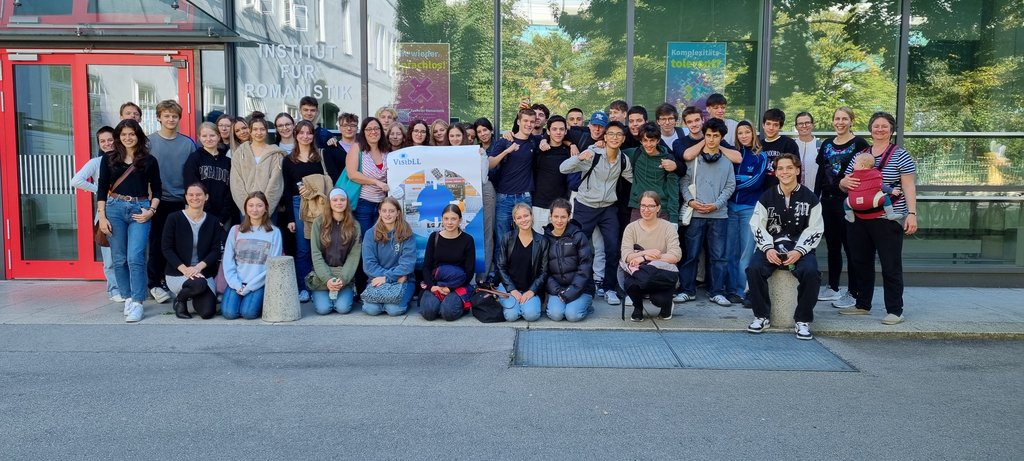
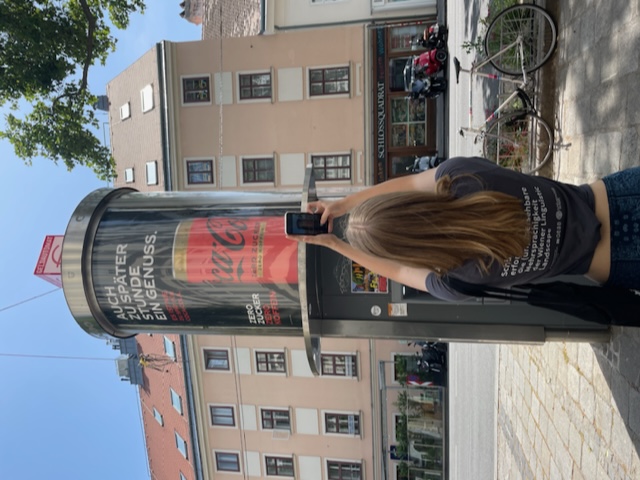
Under “VisibLL”, over 80 students aged 15 to 17 from two Viennese partner schools explored the linguistic landscape of the 5th and 8th city districts as citizen scientists, together with researchers from the University of Vienna. First, they went on walking excursions in their school district to photograph and annotate all signs on which they (also) identified languages other than German. Then, they documented the same in a specific area of investigation on Reinprechtsdorfer and Josefstädter Straße. They used the Lingscape app on their smartphones for this documentation, contributing over 3,400 photos to build the “VisibLL” data corpus for scientific analysis.
The results show that English is by far the most common non-German language in the Viennese linguistic landscape: the students identified English words on almost three-quarters of all documented signs. Words in Italian and French, as typical foreign languages of schooling, come in next but far behind; they are particularly associated with gastronomy and lifestyle (e.g., gelato, boutique). Words that can be assigned to multiple languages, such as restaurant or garage, were also recorded relatively frequently. The most common Viennese migrant languages, such as Bosnian/Croatian/Serbian/Montenegrin or Turkish, were only found on a small percentage of signs in the linguistic landscape.
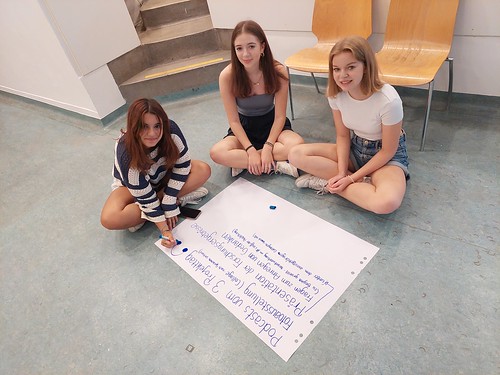
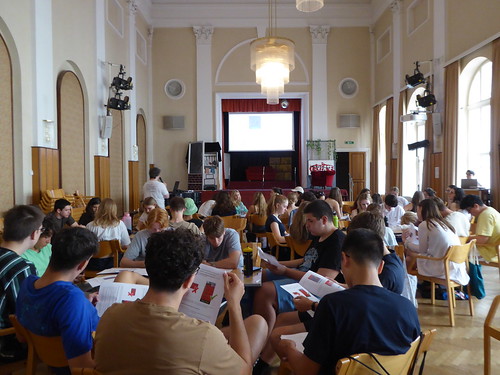
Students and university researchers subsequently critically discussed this make-up of the Viennese linguistic landscape, as well as who actually shapes it (e.g., businesspeople, public administration, passersby), and how it could be changed. Based on the compiled artefacts, results, and experiences, the students created two public exhibitions, which were displayed at two district museums, as well as at the Wissens°raum in the 5th district. In order to encourage and enable other school classes and teachers to explore multilingualism in the linguistic landscape beyond the project, respective teaching packages were developed at the University of Vienna and tested with a third Viennese partner school.
“VisibLL” is an interdisciplinary project that combined linguistics with science education. By exploring multilingualism in their own linguistic landscape, the participating students acquired a deeper awareness of the underlying linguistic and social dynamics. They gained insights into scientific methods and reported a greater appreciation for linguistic diversity. The documentation and analysis of multilingualism in the Viennese linguistic landscape from the perspective of the students, who thereby also define to which language certain words should be assigned, in turn makes a significant contribution to scientific research in the fields of language perception and contact. “VisibLL” also contributed to further promoting the citizen science approach in the humanities.
This project is already completed.
Final Report
-
Endbericht | VisibLL (Opens in new window)(PDF, 1 MB)
Publikation
-
Krammer, L.: Wiens Mehrsprachigkeit VisibLL machen (Opens in new window)2025-09-28, Pint of Science Wien
-
Soukup, B., Seereiner, S., Krammer, L., Pustka, E.: Enhancing LL diversity awareness and appreciation via Citizen Science: The project VisibLL (Opens in new window)2025-09-28, Linguistic Landscape Workshop 16 Universität Duisburg-Essen, Essen Campus
-
Soukup, B.: On the transformative potential of citizen science in the context of linguistic landscapes (Opens in new window)2025-09-28, Linguistic Landscape Workshop 16 Universität Duisburg-Essen, Essen Campus
-
Soukup, B., Krammer, L., Seereiner, S., Pustka, E.: LL-Didaktik im Projekt (Opens in new window)2025-09-28, 47. Österreichische Linguistiktagung (ÖLT) Universität Graz
-
Krammer, L., Soukup, B., Seereiner, S., Pustka, E.: The project VisibLL: Changing language awareness in Viennese high school citizen scientists (Opens in new window)2025-09-28, 5th European Citizen Science Association conference (ecsa2024) BOKU Wien
-
Krammer, L., Soukup, B., Pustka, E., Seereiner, S.,: Halbzeit im Projekt 'VisibLL – Schüler*innen erforschen die (un)übersehbare Mehrsprachigkeit der Wiener Linguistic Landscape' (Opens in new window)2025-09-28, the Institutstagung Germanistik 2024 Universität Wien
-
Soukup, B., Vaattovaara, J.: Practicing Citizen Sociolinguistics: Panel introduction (Opens in new window)2025-09-28, International Conference on Language Variation in Europe (ICLaVE) 12 ÖAW/Universität Wien
-
Soukup, B., Seereiner, S., Krammer, L., Pustka, E.: The project VisibLL: Doing Citizen Sociolinguistics with Viennese high-schoolers (Opens in new window)2025-09-28, International Conference on Language Variation in Europe (ICLaVE) 12 ÖAW/Universität Wien
-
Soukup, B.: Citizen Science mit und in der Öffentlichkeit: Das Projekt "VisibLL – Schüler*innen erforschen die (un)übersehbare Mehrsprachigkeit der Wiener Linguistic Landscape", und was wir daraus gelernt haben (Opens in new window)2025-09-28, Linguistik und Öffentlichkeit: Wer braucht wen und warum (nicht)? Universität Innsbruck
-
Soukup, B., Krammer, L., Seereiner, S., Pustka, E.: Learnings aus dem Projekt ‚VisibLL – Schüler*innen erforschen die (un)sichtbare Mehrsprachigkeit der Wiener Linguistic Landscape‘ (Opens in new window)2025-09-28, Tagung Sprachforschung und Citizen Science des Leibniz-Instituts für Deutsche Sprache Mannheim
-
Pustka, E.: Hasta la mista, baby?‘: Spanisch in der multilingual cityscape (Wien & Berlin) (Opens in new window)2025-09-28, eingeladener Gastvortrag an der Universität Innsbruck Universität Innsbruck
-
Pustka, E., Soukup, B., Krammer, L., Seereiner, S.: VisibLL-Didaktik: Lessons learned und offene Fragen (Opens in new window)2025-09-28, Didaktik-Workshop „Mehrsprachigkeitsdidaktik: Wissenschaft trifft Schule“ Universität Wien
-
Seereiner, S.: VisibLL – high schoolers explore Vienna’s multilingual linguistic landscape with the Lingscape app (Opens in new window)2025-09-28, Recent Advances in Digital Philology Workshop Wien
-
Krammer, L.: VisibLL – Schüler*innen erforschen die (un)übersehbare Mehrsprachigkeit der Wiener Linguistic Landscape (Opens in new window)2025-09-28, Open Science Austria Info-Day Wien Wien
-
Soukup, B., Pustka, E.: 1 Jahr VisibLL: Citizen Science und Wissenschaftskommunikation mit Schüler*innen (Opens in new window)2025-09-28, Vortrag bei der Wiener Sprachgesellschaft Universität Wien
-
Pustka, E., Soukup, B., Krammer, L., Seereiner, S.: Fremdsprachenlernen vor der Haustür: wie Schüler*innen im VisibLL-Projekt die Wiener Sprachlandschaft erforschen (Opens in new window)2025-09-28, Romanistentag Leipzig Universität Leipzig
-
Pustka, E.: Wo Wien französisch, italienisch und spanisch ist: methodische Herausforderungen und didaktische Chancen des Linguistic Landscaping (Opens in new window)2025-09-28, Gastvortrag an der Universität Jena Universität Jena
-
Pustka, E.: So französisch ist die deutsche Sprache (in Wien) (Opens in new window)2025-09-28, Eingeladener Vortrag bei der Österreichisch-Französischen Vereinigung in der Diplomatischen Akademie Wien Wien
-
Seereiner, S., Pustka, E., Soukup, B.: VisibLL: Studying the Viennese multilingual landscape with high schoolers (Opens in new window)2025-09-28, Paysages linguistiques multilingues : regards croisés sur les situations franco-créolophones et germanophones / Multilingual linguistic landscapes: perspectives on Franco-Creole and German-speaking cases Universität Wien
-
Soukup, B., Pustka, E.: VisibLL – Schüler*innen erforschen die (un)übersehbare Mehrsprachigkeit der Wiener Linguistic Landscape. Ein Citizen Science Projekt stellt sich vor (Opens in new window)2025-09-28, Linguistisches Kolloquium des Instituts für Romanistik Universität Wien
-
Pustka, E.: Sprachwissenschaft mit Schüler*innen: ein Projektbericht (Opens in new window)2025-09-28, Zeitschrift für romanische Sprachen und ihre DidaktikIn Druck
-
Pustka, E., Soukup, B., Krammer, L., Seereiner, S.: Linguistic Landscape als (außer-)schulischer Lernort: Erfahrungen aus dem VisibLL-Projekt (Opens in new window)2025-09-10, Das Zusammenspiel physischer Präsenz und digitaler Virtualität im Unterricht romanischer Sprachen ibidem Hannover175-194
 Schools
 Partners from Economy and Society
 Scientific institutions