Snow2School
An interdisciplinary approach for recording changes in snow in Greenland and Austria
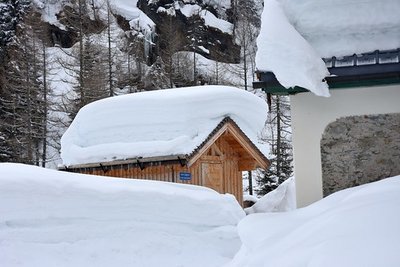
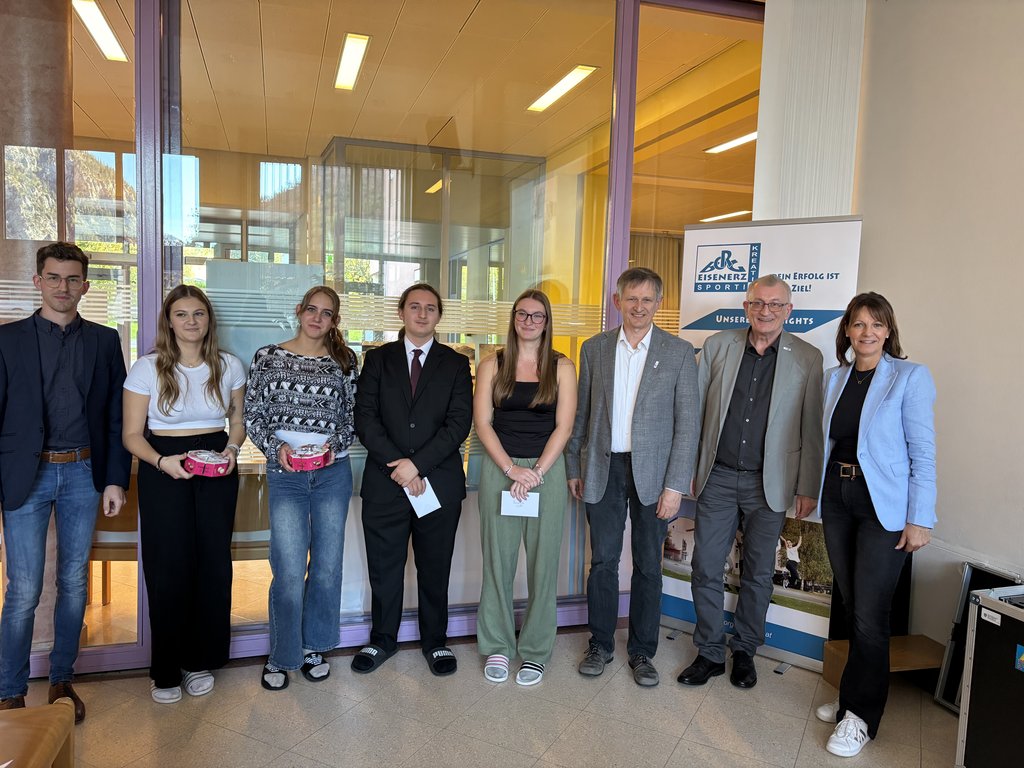
The Snow2School project, a collaboration between climate science (University of Graz), social anthropology (University of Vienna) and two schools (Eisenerz in Austria and Uummannaq in Greenland), developed new methods for deriving quantitative and qualitative information from photographs. The aim of this approach was to use historical photographs to to close gaps in snow measurement data for regions with poor coverage, such as Greenland, by using historical photographs. Whilst changes in snow cover over the last 150 years are well documented for the Alps thanks to extensive measurements, the situation is fundamentally different. Despite the central role of snow for the local population, there are hardly any measurements available for this vast island and region. This research gap formed the starting point and motivation for the project’s overarching research objective.
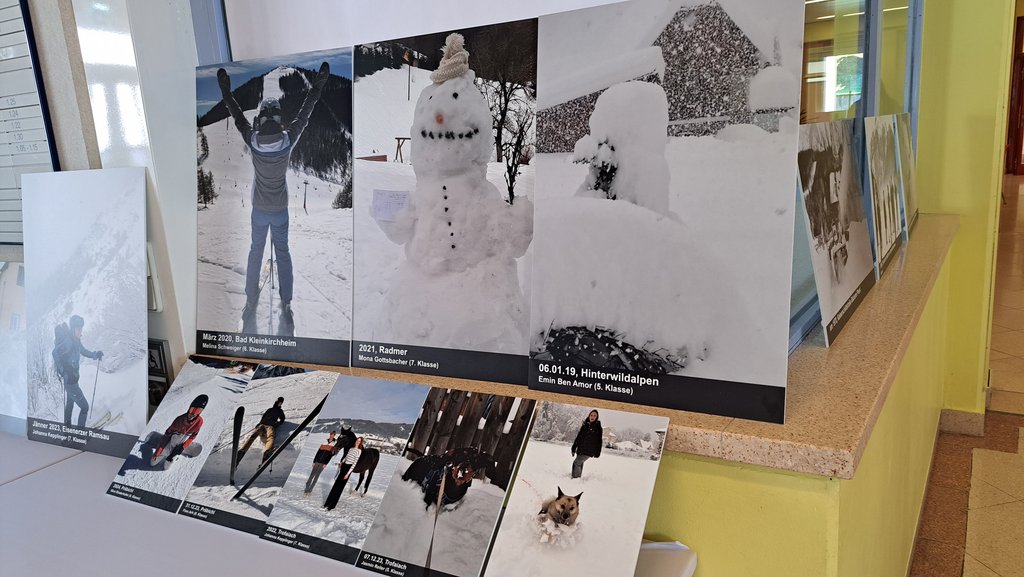
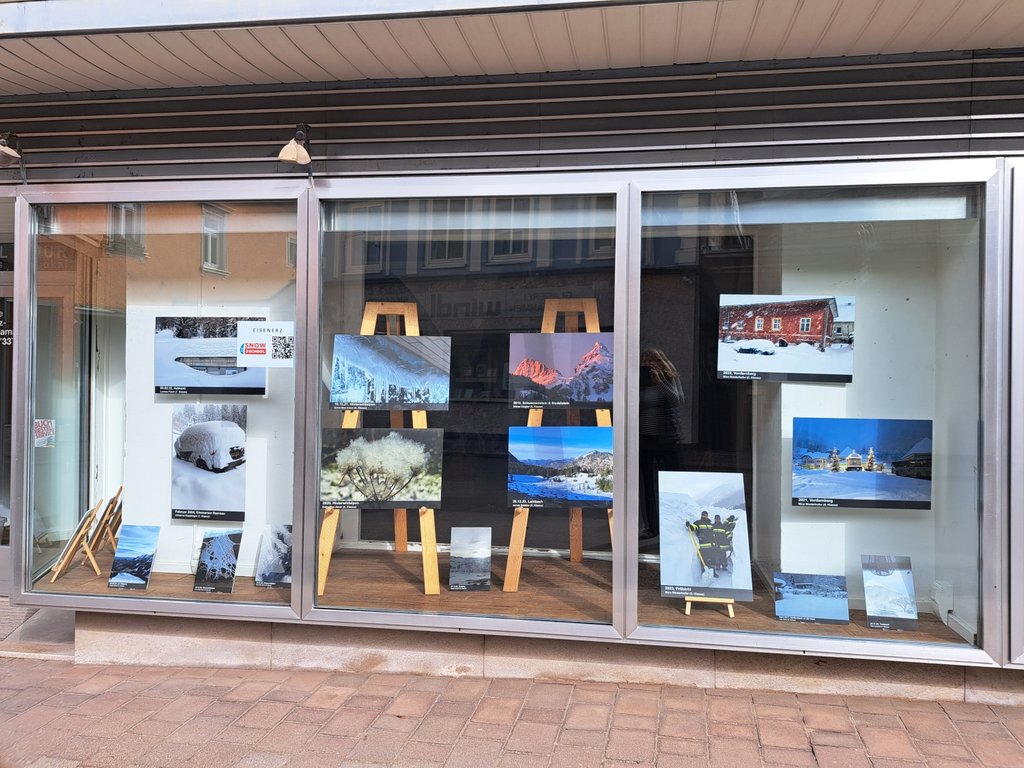
The collection of photographs was organised in collaboration with the teachers and students. To test the suitability of the methods for deriving snow information, simple comparisons were carried out between photographs of exceptional snowfall and time series of snow depth; additionally, corresponding validations were conducted for artificial intelligence methods. Both approaches proved to be well-suited, but the artificial intelligence methods in particular demonstrated a surprisingly high potential for deriving quantitative information. However, in order to apply the developed methods for deriving snow information to regions with no or few measurements, significantly larger quantities of photographs are required than could be collected in Snow2School.
Through a comprehensive analysis of snow measurements in Greenland, combined with newly developed datasets (reanalysis data), the Citizen Science project has significantly improved snow information (snow depth and water equivalent of the snow cover) for Greenland. Our study has demonstrated that the widely used reanalysis data offers great potential for regions with limited measurements, such as Greenland.
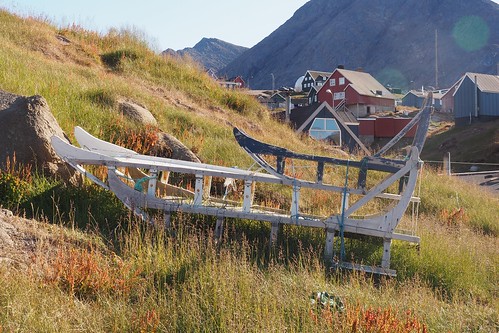
In the social athroplogy part, perceptions of climate change – both in general and specifically in relation to snow – were a particular focus of research in Eisenerz and Uummannaq. It emerged that in Eisenerz, climate change is understood as a reality that people must live with and adapt to. The economic restructuring of recent decades, which is highly relevant to Eisenerz, may have played a formative role and led to a certain degree of resilience. The situation is different in Uummannaq, where the discussion about global climate change is largely brought in from outside by scientists, artists and others, and is thus associated with external influences. Only recently, for example, has climate change found its way into school curricula. Local climate change, on the other hand, is perceived through changes in the everyday lives of the inhabitants (fishing, mobility, hunting). Despite somewhat differing perceptions in the two regions, it has been demonstrated that, as postulated by Snow2School, due to the relevance of snow and its changes, these changes can be very effectively documented using photographs from the past.
This project is already completed.
Publikation
-
van der Schot, J.: Tensions of time scales: local youth involvement in interdisci-plinary Arctic climate change research (Opens in new window)2026-03-17, Arctic Science Summit Week (ASSW) Wien
-
Elixhauser, S.: The aspect of time as a resource in co-creative work (Opens in new window)2026-03-17, Relations and beyond: conference of the Finnish Anthropological Society Rovaniemi, Finland
-
Elixhauser, S.: Engaging with snow and ice: multidisciplinary per-spectives on the changing cryosphere. (Opens in new window)2026-03-17, World Congress of Environmental History (WCEH) Oulu, Finland
-
Sophie Elixhauser: Gesellschaftliche Wahrnehmungen vor Ort (Opens in new window)2026-03-01, Aus Politik und Zeitgeschichte bpb Bonn
-
Walter, A-M. and S. Elixhauser: Cryosphere (Opens in new window)2026-03-01, Roadsides
-
2026-03-01
 Schools
 Partners from Economy and Society
 Scientific institutions