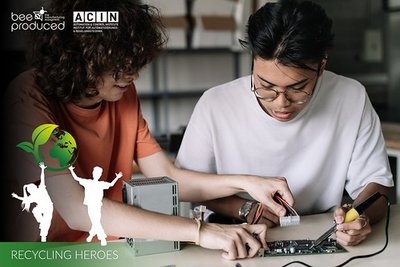
Recycling Heroes
Application of Citizen Science in Schools to boost the Circular Economy in the Electronics Industry
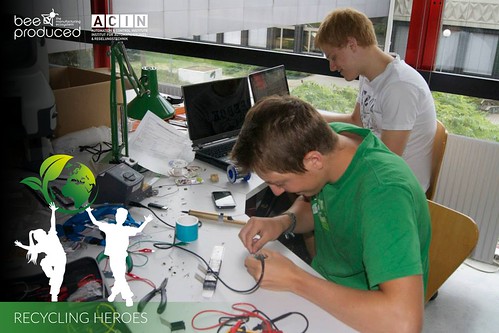
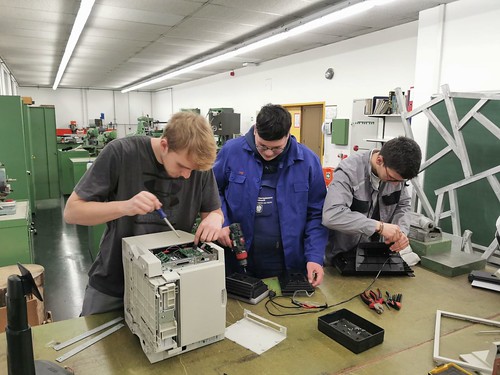
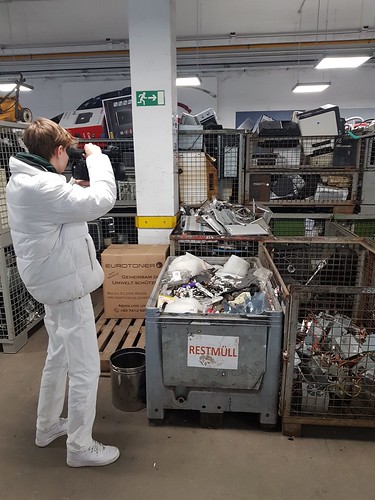
Electrical and electronic equipment is the fastest growing waste stream, but still much of it is not recycled or disposed of correctly. In most cases, the uncollected electronic waste ends up in residual waste and then in landfills or is stored in basements. The “Recycling Heroes” project set out to change this by raising awareness of e-waste, particularly among pupils, but also among the wider public.
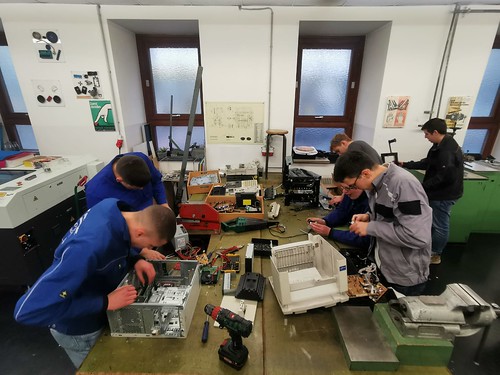
By combining circular economy principles with citizen science methods, participants were actively involved in developing sustainable solutions. As citizen scientists, the pupils developed a comprehensive questionnaire to survey their families and neighbours about how electronic products are used, for how long, and how devices that are no longer needed are disposed of. In doing so, they gained valuable insights into how recycling rates can be increased. At the same time, the pupils designed sustainable and innovative products and services that reuse electronic waste and reduce overall waste based on the insights gained. To spark the pupils’ interest, workshops and excursions were organised to give them practical insights into the circular economy and sustainable technologies. One highlight was the collaboration with the Automation and Control Institute at the Vienna University of Technology, which presented state-of-the-art technological possibilities.
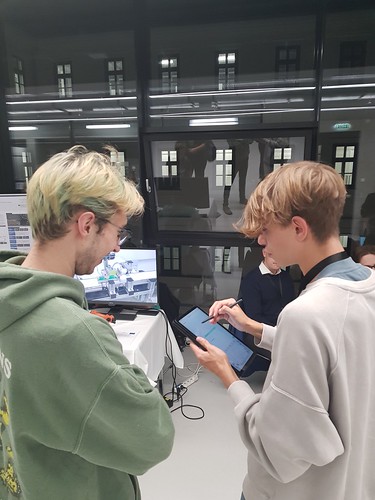
In the analysis and design phase, the pupils developed sustainable prototypes such as a video wall made from old monitors for school events, the interactive training device ‘Hampelmann’ made from recycled components, the platform ‘Collect-e-waste’ for the simple and fast disposal and collection of electronic waste, and a measuring station for monitoring environmental parameters such as CO₂ level, temperature and humidity.
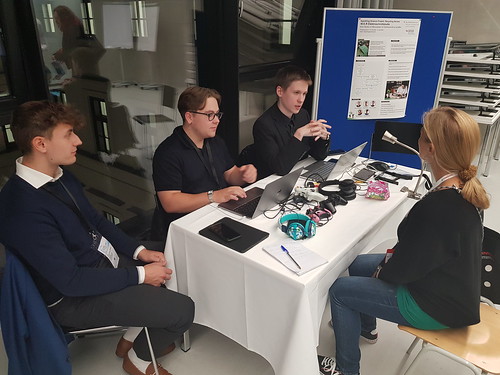
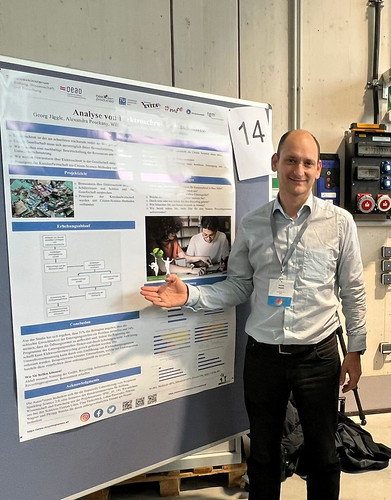
During the implementation phase, the pupils realised their ideas in interdisciplinary teams and tested the prototypes. Feedback from the target groups led to optimisations and further improvements. Both technical and creative skills were developed in the process. The evaluation of the project showed significant progress in the pupils’ sustainability and technology skills. Hands-on approaches and design thinking methods not only strengthened their understanding of recycling and e-waste, but also motivated them to develop innovative solutions to real-world challenges. The project results were presented at international conferences and competitions and received national and international recognition.
The Recycling Heroes project made a valuable contribution to promoting innovation, creativity and sustainable development, and impressively demonstrated how young people can actively shape the challenges of the circular economy through practical learning.
This project is already completed.
Final Report
-
Endbericht | Recycling Heroes (Opens in new window)(PDF, 46 MB)
Publikation
-
Jäggle, G., Lepuschitz, W., Merdan, M., Vincze, M.: Enhancing Sustainability Product Development and Creativity in Education: The Impact of Educational Robotics and Design Thinking on Student Learning (Opens in new window)2024-12-10, In: Auer, M.E., Cukierman, U.R., Vendrell Vidal, E., Tovar Caro, E. (eds) Towards a Hybrid, Flexible and Socially Engaged Higher Education. ICL 2023. Lecture Notes in Networks and Systems, vol 901. Springer Madrid, Spain
-
Jäggle, G., Balogh, R., Vincze, M.: The Effectiveness of Educational Robotics Simulations in Enhancing Student Learning (Opens in new window)2024-12-10, in Enhancing Student Learning. In: Balogh, R., Obdržálek, D., Christoforou, E. (eds) Robotics in Education. RiE 2023. Lecture Notes in Networks and System Limassol
 Schools
 Partners from Economy and Society
 Scientific institutions