MEMMIG
Multilingual Memories of Migration. Students conduct intergenerational interviews
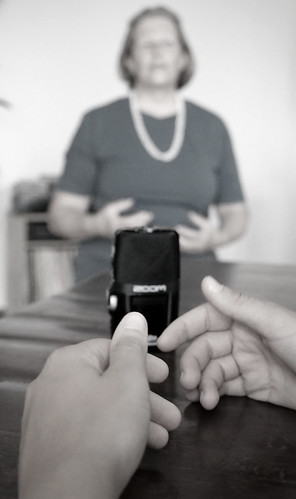
In the participatory oral-history-project “Multilingual Memory of Migration” (MEMMIG), pupils from the 9th grade onwards and university students conducted intergenerational interviews with migrants – in a total of 20 different languages. The aim of the project was to highlight migrant life stories and multilingualism and to help close existing gaps in representation in Austrian archives, where migrant and post-migrant groups and the languages of immigrants have been severely underrepresented to date.
As part of the project, around 100 biographical life-story interviews were recorded, of which two-thirds are audio recordings and one-third are video interviews. They are archived, catalogued, and largely published online by the Austrian Mediathek. All interviews conducted in languages other than German or English were translated into German and provided with subtitles. This collection contributes to the creation of an Austrian “Archive of Migration.” It inscribes the life stories of migrants – as well as their first languages – into the national cultural heritage and makes them accessible to researchers and to a wider public.
The online exhibition will present a selection of interview excerpts organized by thematic aspects that exemplify the character of the project and highlight central focal points of the collected interviews.
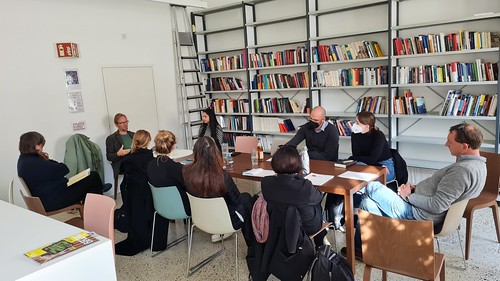
The collaboration with pupils took place in year-long school projects, and with university students within the framework of semester courses. Most participating schools were academic secondary schools or vocational schools. At university level, participants included student teachers as well as students in the field of German as a Foreign and Second Language.
The pupils and students were introduced to the project and trained in the practice of conducting interviews. They identified potential interview partners within their families, circles of friends, and acquaintances, held initial conversations with them, and informed them about the project and its aims. In class or in the university course, they developed general interview questions, and in small teams they refined these questions with regards to each interview partner. These teams conducted the interviews; close family members were not allowed to interview one another. The completed interviews were presented in excerpts in the group, followed by discussions about the interview experience. Student teachers also reflected on the content of the migration biographies in relation to the migration-related diversity of the “classroom.”
For many of the pupils and students who speak a first language other than German, the interviews provided the first opportunity within an educational context to use these languages in a targeted way and to have them recognized as valuable educational capital and resource.
This project is already completed.
Final Report
-
Endbericht | GEDMIG (Opens in new window)(PDF, 558 KB)


Publikation
-
Imamovic Edna, Traska Georg: Ein Positionspapier (Opens in new window)2025-11-30, Zeitschrift für Deutsch im Kontext von Mehrsprachigkeit2025/41
-
Traska Georg: A Participatory Oral History Project in Austria (Opens in new window)2025-11-30, Journal of Elementary Education2024/17
 Schools
 Partners from Economy and Society
 Scientific institutions