Aquirufa
Biodiversity and ecology of freshwater bacteria
Many people initially associate bacteria with diseases. However, bacteria are essential for our ecosystems. They enable the functioning of biogeochemical cycles, contribute to primary production, and perform numerous other important functions. These organisms are extremely small and occur in vast numbers in our environment. Without them, life on Earth as we know it would not be possible. Nevertheless, surprisingly little is known about the diversity and ecology of bacteria. There are likely billions of different species, but only a small fraction of them have been scientifically described so far.
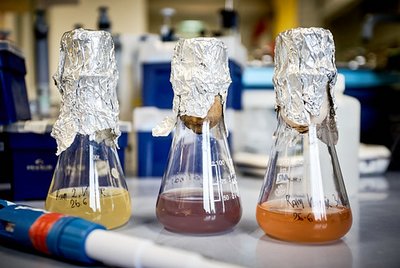
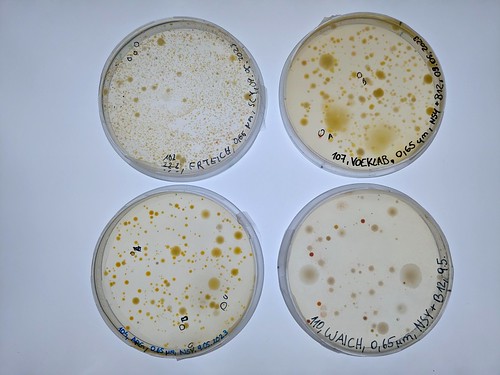
The focus of the project was the bacterial genus Aquirufa. It was discovered in a previous Sparkling Science project together with students in a stream near Salzburg. These bacteria are red-pigmented, although this only becomes visible when they are cultivated in the laboratory. The scientific name “Aquirufa”, given by the students, originates from Latin and means ‘the red one from the water’. The genus comprises a diverse group of bacteria that occur in freshwater environments worldwide.
The current project “Aquirufa” pursued two main goals: First, to communicate knowledge about the world of bacteria and their importance for our ecosystems in an understandable way. Second, to scientifically investigate the genus “Aquirufa” and the associated species. A particular concern was to involve citizen scientists actively in the research over several years.
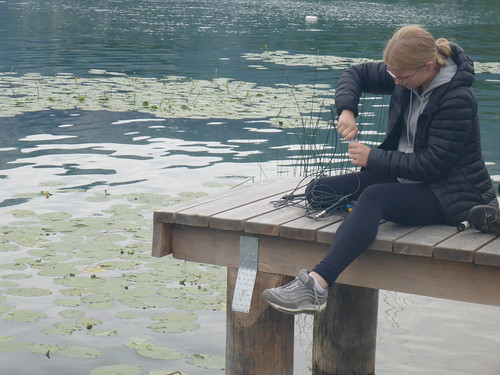
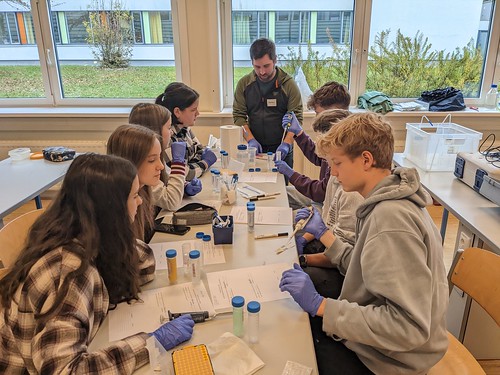
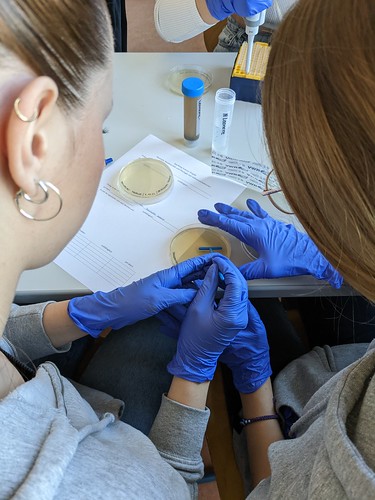
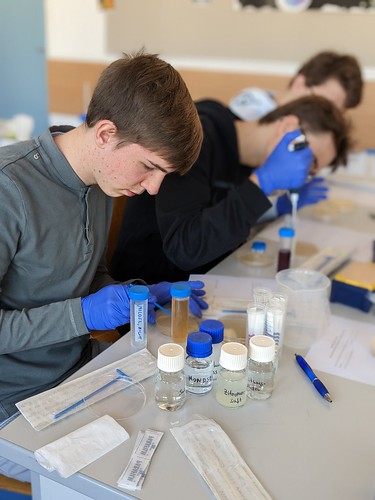
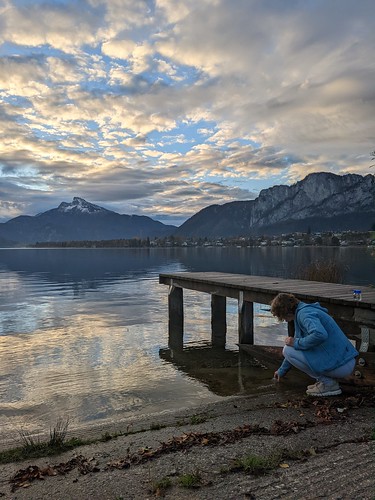
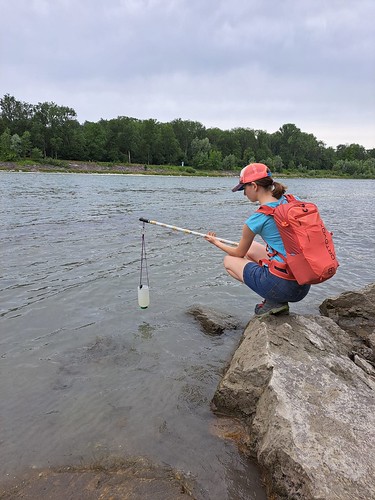
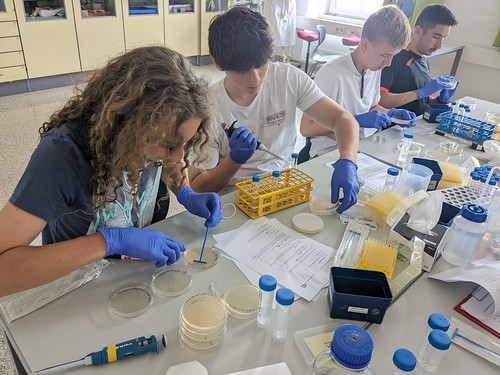
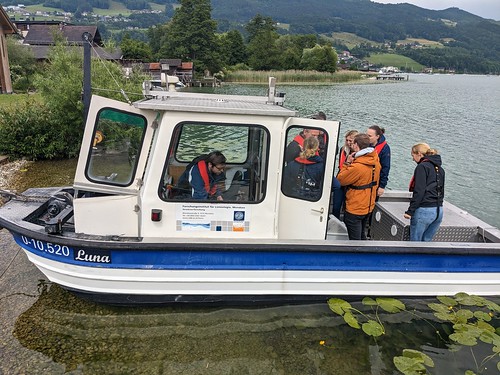
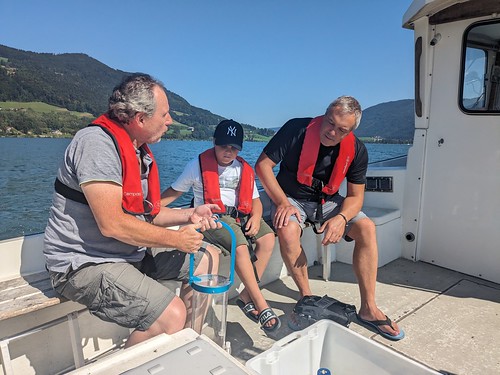
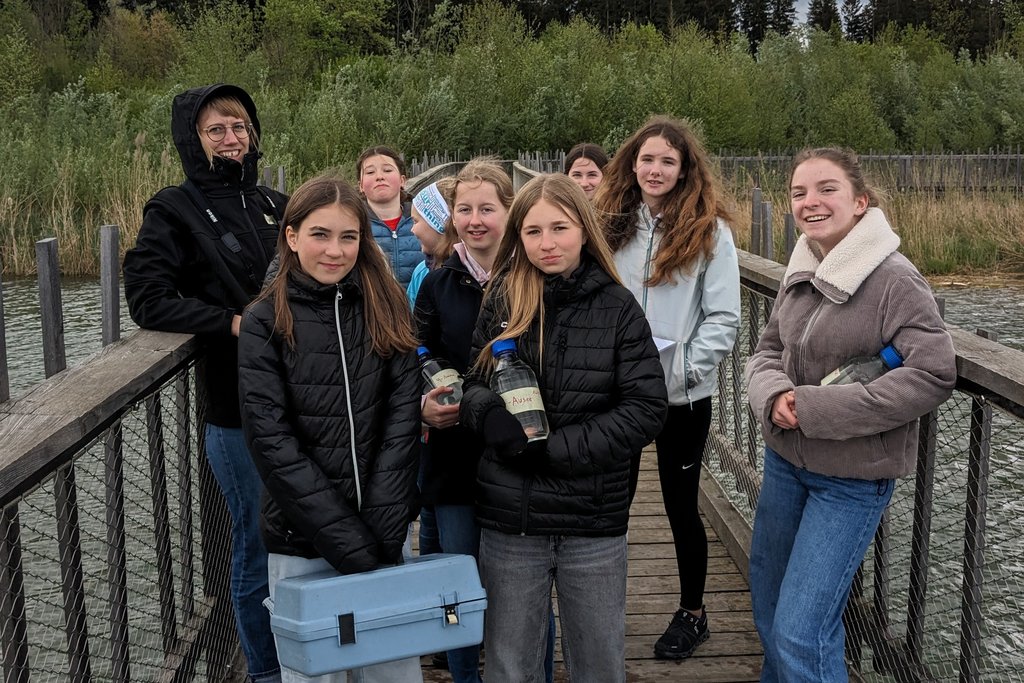
Students from eight school classes, along with other citizen scientists, including a group of divers, collected around 200 water samples from self-selected water bodies and carried out measurements. The samples were processed in the classroom as well as in the Nature and Education Centre Auenwerkstatt (Haus der Natur Salzburg) and used to establish bacterial cultures. Some students participated in summer internships at the laboratory of the Research Institute for Limnology in Mondsee, where they conducted experiments with the obtained bacterial cultures. The school classes were supported in naming newly discovered species by Professor Aharon Oren (Israel). In the second phase of the project, 130 water samples were collected together, and environmental parameters were measured directly on site. These samples were used to detect different species directly from the water sample using molecular methods.
Thanks to the dedicated participation of the citizen scientists, 15 new Aquirufa species were described in scientific publications. This work provided important new insights into their lifestyle, ecology, and distribution. Of particular interest was the finding that some of these bacteria can use sunlight to generate energy. Initial analyses of the water samples also showed that the diversity of this bacterial group is significantly greater than previously assumed. The project has therefore not only generated new knowledge but has also demonstrated that there is still a considerable need for further research.
This project is already completed.
Final Report
-
Hahn M., Pitt A.: Endbericht | Aquirufa (Opens in new window)2026-06-23 (PDF, 4 MB)


Publikation
-
2026-03-04
-
Pitt A, Lienbacher S, Schmidt J, Hahn M: Acht Jahre Erforschung von Gewässerbakterien mit Citizen Scientists: Eine Bilanz mit Fokus auf geschaffenem Wissen (Opens in new window)2026-03-03, Österreichische Citizen Science Konferenz 2026 Leoben
-
Pitt A, Lienbacher S, Schmidt S, Hahn MW: Schüler/innen arbeiten in der Grundlagenforschung mit: Erkenntnisse zur Bedeutung, Ökologie und Biodiversität von Gewässerbakterien (Opens in new window)2025-10-15, 25. Internationale Tagung der Fachsektion Didaktik der Biologie (FDdB) im VBIO in Kooperation mit dem Verein Österreichischer Biologiedidaktik (VÖBD) Innsbruck
-
Pitt, A.: Aquirufa – Erforschung von Gewässerbakterien (Opens in new window)2025-09-10, BIOspektrum31. Jahrgang, 05.25
-
Pitt A., Liebbacher S., Schmidt J., Neumann-Schaal M., Wolf Jacqueline, Reichl S., Hahn M. W.: Aquirufa esocilacus sp. nov., Aquirufa originis sp. nov., Aquirufa avitistagni, and Aquirufa echingensis sp. nov. discovered in small freshwater habitats in Austria during a citizen science project (Opens in new window)2025-02-26, Archives of Microbiology(2025) 207:71
-
Pitt A., Lienbacher S., Schmidt J., Neumann-Schaal M., Wolf J., Wenng H., Oren A., Huber Z., Hahn M.W.: Biodiversity of strains belonging to the freshwater genus Aquirufa in a riparian forest restoration area in Salzburg, Austria, with a focus on the description of Aquirufa salirivi sp. nov. and Aquirufa novilacunae sp. nov. (Opens in new window)2025-02-23, International Microbiologyonline first
-
Pitt A, Lienbacher S, Schmidt J, Hahn M: Wie können Citizen Scientists zur Erforschung von Gewässerbakterien beitragen? (Opens in new window)2024-09-14, ECSA 2024 Konferenz Wien
-
Pitt A., · Lienbacher S., · Schmidt J., · Neumann‑Schaal M., · Wolf J., Hahn M. W.: Description of a new freshwater bacterium Aquirufa ... (Opens in new window)2024-01-30, Archives of MicrobiologyVolume 206
-
Pitt A: Aquirufa – Biodiversität und Ökologie von Süßwasserbakterien (Opens in new window)2023-09-04, BIOspektrum5/2023
-
Pitt A, Hahn M: Wissen schaffen mit Citizen Scientists: Biodiversität und Ökologie von Süßwasserbakterien (Opens in new window)2023-08-08, Biologie in Unserer Zeit53(3)
 Schools
 Partners from Economy and Society
 Scientific institutions