TRA:WELL
Transport and Wellbeing
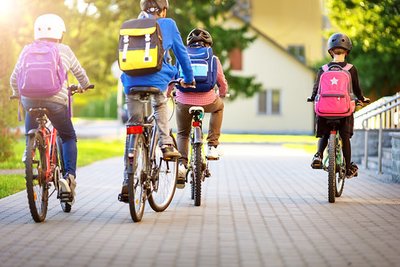
The aim of the “TRA:WELL” project (2022-2024) was to investigate the connection between children's mobility behaviour and their wellbeing. The research approach was to take into account all physical activity behaviour and demonstrate the contribution of active forms of mobility (walking, cycling or scootering) to the fulfilment of physical activity recommendations. In addition, research was conducted into how children perceive the built environment in order to demonstrate from a child-centred perspective how urban environments can promote child-friendly mobility.
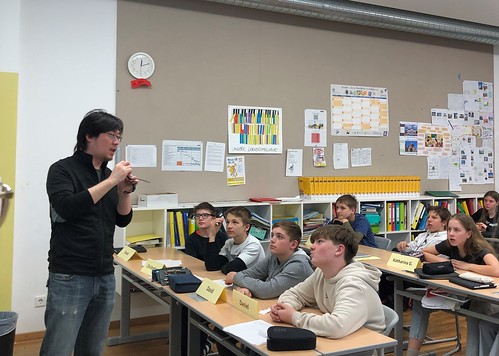
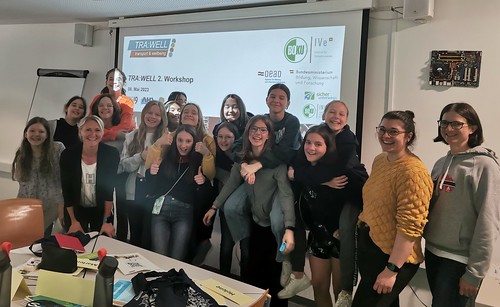
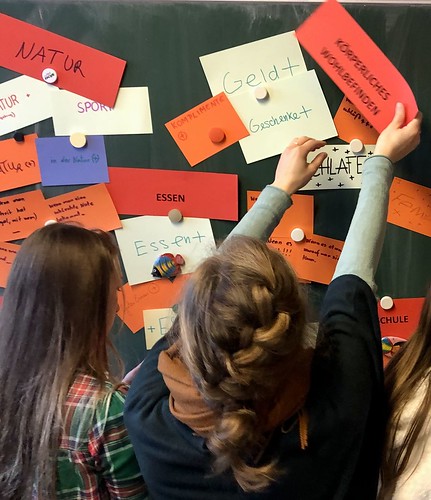
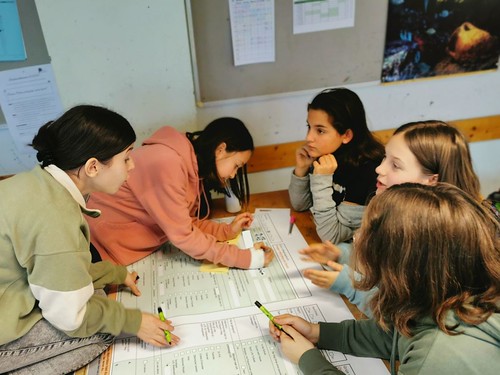
“TRA:WELL” combined quantitative and qualitative methodological approaches at the intersection of mobility and health research, transport psychology and transport planning. The project was carried out with pupils from three schools in Vienna and Korneuburg at the age between 12 and 14 years. A central concern was to place the children's perspective at the centre. Some of the survey instruments were therefore developed together with schoolchildren to ensure that the research was child-orientated and relevant to the reality of their lives.
In addition to the use of written and online questionnaires, group interviews and creative methods as part of workshops, sensors such as activity trackers, eye trackers and EDA sensors were also used to record both objective and subjective dimensions of the topic. These diverse approaches enabled the project to comprehensively investigate which factors promote or hinder children's active and independent mobility - and how children feel safe and comfortable when travelling on foot, by scooter or by bike.
Active forms of mobility such as walking or cycling proved to be key factors for children's well-being. By recording all physical activity behaviour, it was possible to explicitly prove and quantify that active mobility contributes to fulfilling the WHO physical activity recommendations. In addition, correlations between physiological responses and transport use were also identified, taking into account the influence of factors such as emotions, social interaction and the nature of the environment.
Specifically, factors relating to aesthetics (proportion of greenery, cleanliness of the traffic environment) and infrastructure (width of the footway) play an important role when walking. When cycling, aspects that influence the subjective perception of safety, such as the distance to motor vehicle traffic and the traffic volume, are particularly relevant.
The study of mobility-related attitudes showed that children tend to perceive active forms of mobility as health-promoting and environmentally friendly. Cycling in particular was often associated with fun and freedom and perceived as ‘cool’; the car scored highly in terms of convenience. With increasing age, however, the positive attitude towards active modes of transport decreased significantly, while the car became more attractive.
The project results show how important it is to record needs from a child's perspective. This is the only way to create urban spaces that are suitable for children and young people. At the same time, the project provides insights into child/youth-orientated interventions to promote active forms of mobility. The teaching materials developed as part of the project on the topic of active mobility and well-being are available to educators.
This project is already completed.
Final Report
-
Endbericht | TRA:WELL (Opens in new window)(PDF, 2 MB)
Publikation
-
Su S, Stark J, Hössinger R, Susilo Y: Analysis of Physiological Responses of Children to Active Travel (Opens in new window)2024-10-30, TRB 2024 Washington
-
Stark J, Hössinger R, Ajzen I: Explaining children’s physical activity: Experiential attitudes in the theory of planned behaviour (submitted) (Opens in new window)2024-10-30, Transportation Research Part F
-
Huter E.: Mobilitätsverhalten von Kindern und Erwachsenen im Vergleich (Opens in new window)2024-10-18, Universität für Bodenkultur
-
Radosavljevic K.: Gesundheitsbezogene Lebensqualität von Kindern im Zusammenhang mit aktiver Mobilität (Arbeitstitel) (Opens in new window)2024-10-18, Universität für Bodenkultur
-
Stark J, Hössinger R, Su S, Werner L, Punz T: Exploring Adolescents (Opens in new window)2024-10-18, International Conference on Transport Survey Methods (ISCTSC) Dang Nang, Vietnam
-
Su S, Stark J: Exploring Behavioural and Physiological Responses of Children to Micro-mobility Travel in a Multi-modal Virtual Reality Setup (accepted for publication) (Opens in new window)2024-10-18, International Conference on Transport Survey Methods (ISCTSC) Dang Nang, Vietnam
-
Stark J, Hössinger R: Combining TPB and Trip Characteristics to Explain Children’s Active Travel (accepted for publication) (Opens in new window)2024-10-18, International Conference on Transport Survey Methods (ISCTSC) Dang Nang, Vietnam
-
Stark J, Wegener S, Batiajew V, Hössinger R, Su S: Intersecting Mobility and Physical Activity: A Comprehensive Multi-Day Survey Approach for Assessing Movement Behavior in Early Adolescence (accepted for publication) (Opens in new window)2024-10-18, International Conference on Transport Survey Methods (ISCTSC) (accepted) Dang Nang, Vietnam
-
Stark J, Wegener S, Hössinger R, Werner L, Punz T: Paving the Path: Understanding Children (Opens in new window)2024-10-18, Walk21 Lisbon, Portugal
-
2024-07-26, TRA:WELL Abschlusskonferenz Wien, Österreich
-
Stark J, Batiajew V, Wegener S, Hössinger R: Cycling - healthy and environmentally friendly - but still not my cup of tea? - Children (Opens in new window)2024-07-25, Velo-city Conference 2024 Ghent, Belgien
-
Stark J: Sparkling Science in the field of Transport and Wellbeing - Young people as researchers and research subjects (Opens in new window)2024-07-25, Children in the City Symposium Montreal, Kanada (Online-Teilnahme)
-
Stark J, Wegener S, Hössinger R: Einstellungen von Kindern zum Radfahren (Opens in new window)2024-07-25, 15. Österreichischer Radgipfel - Radfahren für alle Wiener Neustadt, Österreich
-
Stark J, Wegener S, Su S, Hössinger R: Straßenräume zum Wohlfühlen und aktiv mobil Sein aus der Sicht von Kindern (Opens in new window)2024-07-24, walkspace 2024: XVIII. Österr. Fachkonferenz für FußgängerInnen 2024 Seestadt, Wien
-
Stark J, Wegener S, Hössinger R, Su S: Macht Zufußgehen glücklich? Der Zusammenhang von Aktiver Mobilität, körperlicher Aktivität und dem Wohlbefinden von Kindern (Opens in new window)2024-07-24, walkspace 2024: XVIII. Österr. Fachkonferenz für FußgängerInnen 2024 Seestadt, Wien
-
Stark J, Wegener S, Batiajew V, Su S, Hösinger R, Braito M, Schauppenlehner-Kloyber E, Schützhofer B, Panian T, Krammer-Kritzer B: TRA:WELL – Transport & Wellbeing (Opens in new window)2024-07-24, OIS-Zam-Forum für Gesundheit und Wohlbefinden 2023 Linz, Österreich
-
Su S, Stark J, Hössinger R, Susilo Y: Analysis of Physiological Responses of Children to Active Travel (Opens in new window)2024-07-24, TRB 103rd Annual Meeting 2023 Washington DC, USA
-
Su S, Palmberg RCO, Fidler M, Susilo YO: The comparison of behaviours and physiological responses of travelling by bicycle and e-Scooter in a multi-modal virtual reality setup (Opens in new window)2024-07-24, 17th International Conference on Travel Behavior Research (IATBR) Wien, Österreich
-
Stark J, Wegener S, Batiajew V, Su S, Huter E, Hössinger R: Children’s Active Mobility, Physical Activity and Well-being (Opens in new window)2024-07-24, 17th International Conference on Travel Behavior Research (IATBR) Wien, Österreich
-
Wegener S, Stark J, Hössinger R: Zufußgehen: eine coole Sache? – Mobilitätsbezogene Einstellungen von Kindern (Opens in new window)2024-07-24, XVII. Österreichische Fachkonferenz für Fußgänger*innen Weiz, Österreich
-
Wegener S, Stark J, Batiajew V, Hössinger R, Su S, Schauppenlehner-Kloyber E, Braito M: TRA:WELL - Transport and Wellbeing (Opens in new window)2024-07-24, XVII. Österreichische Fachkonferenz für Fußgänger*innen Weiz, Österreich
-
Wegener S, Stark J: TRA:WELL - Transport and Wellbeing (Opens in new window)2024-07-24, XVI. Österr. Fachkonferenz für FußgängerInnen 2022 Korneuburg, Österreich
 Schools
 Partners from Economy and Society
 Scientific institutions