
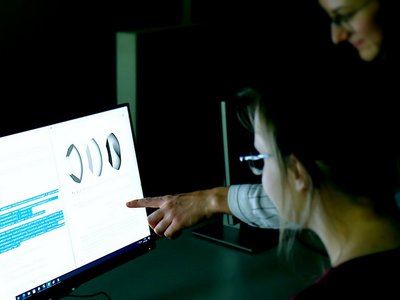
Between 2022 and 2025, the MAJA project focused on mathematical algorithms that play a central role in digital applications such as search engines, data visualisations and computer simulations. To make these often abstract concepts more accessible, the project developed teaching materials that enable pupils to learn and understand the central principles of algorithmics. The aim of the project team at the University of Salzburg is to promote an understanding of mathematics and to highlight mathematical algorithms as an important part of our everyday digital lives.
The Daten*bilden project, which has been running at the University of Vienna since 2024, also recently provided teaching materials. The focus is on how to handle data in an increasingly digitalised world. The workshop ‘What is data?’ is designed to introduce secondary school pupils to topics such as data, data protection and critical data literacy. Using the teaching materials, young people learn how data is created and how it is used.
These two examples show how Sparkling Science projects can be turned into concrete teaching materials that bring current research findings into the classroom. In addition, the OeAD resource collection offers an overview of handouts and publications on the implementation of participatory research projects and the design of materials. One example is the handout ‘Citizen Science. Research with Schools’, which contains practical tips for joint citizen science projects.
It is well worth taking a look at the teaching materials and resource collection!
To the teaching materials for ‘MAJA’and ‘Daten*bilden’
To the resource collection ‘Citizen Science and School’