48 News gefunden
-
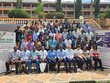
© Mary T. KaggwaThe project aims to combine biosorption and chemical remediation techniques to treat contaminated wastewater and tailings, and rehabilitate contaminated soils, thereby safeguarding vulnerable ecosystems around artisanal gold mining (ASGM) areas in Uganda. The biochar composites will be developed from locally available biomass to make them suitable for remediation of the soils for agricultural purposes.2 min lesen · 06. August 2025 -
© OeADGIRT | Report on the 3rd project year
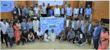
GIRT’s third project year was dedicated to analysing the qualitative research phase in Ethiopia and Mozambique. Once interviewing was completed at all four study sites, a preliminary assessment of the data was conducted. Altogether, more than 400 interviews with female and male residents in informal settlements and slums had been conducted by researchers, as well as PhD students and research associates affiliated with the project. In a joint effort, the project team conceived a master plan for transcribing, translating and coding all interviews.3 min lesen · 05. August 2025 -
© Ingeborg SperlAdvancing local capacities for livestock breeding | LoCaBreed | Report 1st project year
The LoCaBreed2.0 project, launched in October 2022, is making strides in strengthening local capacities for livestock breeding in Burkina Faso through collaborative efforts and community engagement. Highlights so far include a dynamic kick-off meeting in Bobo-Dioulasso and the recruitment of promising doctoral and MSc students to drive research and knowledge transfer.4 min lesen · 04. August 2025 -
© Elke StinnigInnovating Tourism Education: Visit of Austrian Team to Mozambique
This visit was a key step in building capacity and fostering collaboration between Austrian and Mozambican partners - IMC Krems and Universidade Eduardo Mondlane - to advance sustainable rural tourism education in Mozambique, in line with CAST Mozambique’s key objectives.5 min lesen · 04. August 2025 -
© Temur GugushviliEnhancing Mountain Tourism Resilience | ReMoDe | Report 1st project year
Mountain tourism in the Alps and the Caucasus faces growing resilience challenges—ReMoDe tackles them head-on. Insights on how this Georgian-Austrian APPEAR Project empowers local stakeholders and builds long-term crisis response capacity.2 min lesen · 21. Juli 2025 -
© ArmBioClimateBuilding Armenia’s Resilience through science - Insights of ArmBioClimate | Second Year Report
How can Armenia protect biodiversity, prevent zoonotic outbreaks, and adapt to climate change? The ArmBioClimate project is turning science into action with cutting-edge research. An overview of the second year of this APPEAR project.2 min lesen · 21. Juli 2025 -
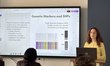
© Catherine AgoeGenetics markers for resilient aquaculture: Catherine Agoe presents her research at AFRAQ25
Catherine Agoe, an APPEAR scholarship holder, presented her research on using immune gene-based EPIC markers to support the conservation and management of Tilapiine species in East Africa at the World Aquaculture Safari 2025 in Kampala. Her work bridges molecular genetics and aquaculture innovation—helping build resilient fish populations in the face of climate change and disease.3 min lesen · 21. Juli 2025 -
© Charles RutikangaFrom the streets of Kigali to an international conference: Charles Rutikanga on youth resilience
At the International Conference on Social Work and Social Development in June 2025 in Uganda, APPEAR scholar Charles Rutikanga presented powerful findings on the lives of street children in Kigali. His study reveals not only the deep vulnerabilities these children face—poverty, exclusion, and abuse—but also their remarkable resilience and urgent calls for reintegration and support.4 min lesen · 21. Juli 2025 -
© Francis Kilundu MusyokaFrancis Musyoka finished PhD on Sustainable Land and Water Management
How can we enhance agricultural sustainability while safeguarding water resources? In his PhD at the University of Natural Resources and Life Sciences (BOKU), Francis Kilundu Musyoka applied advanced hydrological modelling to assess the impact of sustainable land management practices. His work provides critical insights for improving water quality and resilience in agro-ecosystems.3 min lesen · 07. Juli 2025 -
© Priscilla NyadoiFrom Genetic Research to Environmental Impact: Dr. Priscilla Nyadoi’s remarkable journey
Dr. Nyadoi Priscilla is a trailblazing Ugandan scientist and OeAD Scholarship alumna who studied population genetics of Tamarindus indica L. at Austria’s AIT and the University of Vienna. She earned her PhD from Makerere University in 2011. Today, she serves as Deputy Director at Uganda Martyrs University and is the Chairperson of the Organization for Women in Sciences for the Developing World (OWSD) Uganda National Chapter. A dedicated advocate for science and conservation, she also serves on national and international environmental boards, including NEMA and IUCN-CEM.4 min lesen · 02. Juli 2025 -
© European CommissionNationale eTwinning-Qualitätssiegel 2025
Auszeichnung für virtuelle Zusammenarbeit mit Partnerschulen in Europa: 23 nationale eTwinning-Qualitätssiegel verliehen2 min lesen · 02. Juli 2025 -
© canva/Jacob LundCampus International 2025: Wie Auslandsaufenthalte Karrierewege prägen – Jetzt mitwirken!
Studierende und Hochschulen sind eingeladen, Teil einer europaweiten Studie zu werden.1 min lesen · 01. Juli 2025