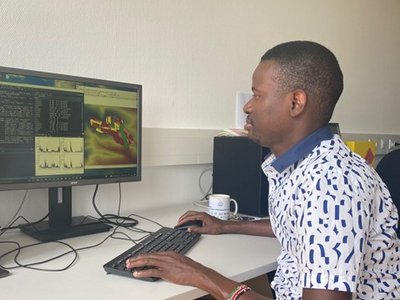
Francis Kilundu Musyoka defended his PhD thesis, titled 'Multi-Step Calibration of the SWAT Model and Evaluation of Sustainable Land Management Practices', at the University of Natural Resources and Life Sciences, Vienna (BOKU), in May 2025. His expertise spans hydrological modelling, soil and water conservation, and the environmental assessment of agricultural systems. His doctoral research has equipped him with advanced skills in watershed modelling and the evaluation of sustainable land management practices, both of which are crucial for addressing contemporary environmental challenges in agriculture.
He completed his PhD at the Institute of Soil Physics and Rural Water Management at BOKU University. His research focused on developing and comparing calibration approaches for the SWAT (Soil & Water Assessment Tool) model, as well as evaluating the effectiveness of various SLM (Sustainable Land Management) practices in reducing soil erosion and nutrient pollution. This study was conducted in the Hydrological Open Air Laboratory (HOAL) catchment in Petzenkirchen, Lower Austria — a 66-hectare research watershed with extensive monitoring capabilities. Agricultural non-point source pollution significantly degrades water quality in watersheds, while soil erosion reduces land productivity and pollutes water bodies. Given that the EU Water Framework Directive aims to improve water quality and the Nitrates Directive targets a 50% reduction in nitrogen and phosphorus, there is an urgent need for effective tools to evaluate agricultural management practices. Francis's research addressed this challenge by developing improved calibration methods for hydrological models and assessing sustainable farming practices.
His ethnographic approach to watershed research involved extensive field monitoring and data collection over multiple years. The study employed stepwise and simultaneous calibration approaches to compare their effectiveness in representing hydrological processes. Francis examined four scenarios: conventional tillage as a baseline, contour farming, cover crops and no-till combined with cover crops. By analyzing surface runoff, groundwater flow, soil moisture, crop yields and nutrient transport in detail, he was able to quantify the environmental benefits of each practice.
Francis emphasizes the importance of using stepwise calibration methods within hydrological modelling. This approach enabled him to calibrate individual hydrological components sequentially, resulting in a more accurate representation of watershed processes. This methodology involved calibrating surface runoff, groundwater flow, crop yields, soil moisture and streamflow in distinct steps, enabling more accurate simulation of complex hydrological interactions.
Prior to his doctoral studies, Francis worked extensively in water resources management and environmental modelling. He has participated in numerous regional and international conferences and research collaborations. His ongoing efforts aim to promote sustainable agricultural practices and improve water quality management policies, inspiring the next generation of environmental engineers to dedicate themselves to sustainable development and climate resilience in agricultural systems.