
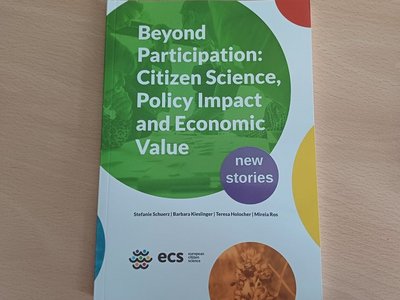
The publication presents case studies from various European and international contexts.
It focuses on so-called “impact stories,” which illustrate how citizen science is implemented across different institutional and societal settings. These examples show how participatory processes contribute to knowledge generation and how this knowledge can inform policy-making and economic developments.
One chapter is dedicated to Austria and outlines the development of citizen science in relation to public strategies and funding instruments. Austria is described as a country where citizen science has been supported early on through public measures, particularly through initiatives in the school sector aimed at making science accessible to diverse target groups. The Sparkling Science programmes, which have supported collaborations between research and schools since 2007, are highlighted as a key example. Within this context, the OeAD Centre for Citizen Science is mentioned as one of the institutions contributing to networking activities between stakeholders from research, education, and society.
The chapter is based on interviews with representatives of the Austrian Federal Ministry of Women, Science and Research (BMFWF) and Petra Siegele, Head of Public Science at OeAD.
Overall, the publication presents citizen science in Europe and beyond as an approach that connects participation in scientific processes with societal and institutional questions and is applied across a range of fields.
Schuerz, S., Kieslinger, B., Holocher, T., Ros, M. (2026). Beyond Participation: Citizen Science, Policy Impact and Economic Value. Zenodo. https://doi.org/10.5281/zenodo.20084379