
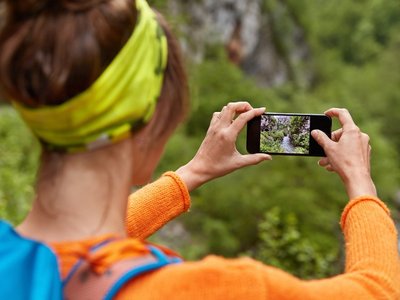
The differences depend on the app used, the user group and prior knowledge.
The study, which was recently published in the journal Basic and Applied Ecology, focuses on the question of how representative the data collected with various photo apps (e.g. iNaturalist, Observation.org or ‘Blühendes Österreich’) really is.
The differences documented in the study are significant: they show that citizen science data is a valuable source of information, but one that is also strongly influenced by user groups. At the same time, it is precisely this diversity of perspectives that opens up new opportunities to obtain as realistic a picture of biodiversity as possible.
The study also makes it clear that species knowledge is key to comprehensively perceiving biological diversity. Many species are simply overlooked by most people because they are difficult to identify or occur in habitats that have become rare.
Habel, J.C., Schmitt, T., Gros, P. et al. (2024): How citizens see biodiversity – A comparative study on butterfly records from different photo apps. In: Basic and Applied Ecology.