Exclusion and ageism, i.e. prejudices or disadvantages based on age, affect both older and younger people. This is where the Sparkling-Science-project “The generational-friendly city” comes in. Its aim is to research the generational friendliness of a city using the example of Wiener Neustadt from the perspective of both young people and older adults. The aim is to gain a transdisciplinary understanding of how young people and older people perceive the opportunities for participation in the city's public spaces. The research design is an action-oriented, participatory citizen science approach that includes both young people and older adults. Research methods include storytelling cafés to collect age and youth images, “ACT-OUT” - an instrument for recording participation outside the home - and visual participatory research methods (shadowing, photovoice or go-along interviews).
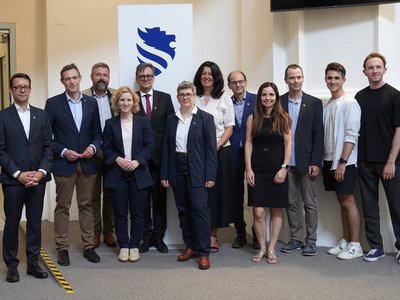
The head of the project, Verena Tatzer-Hanten, presented “The generational-friendly city” to Minister Eva-Maria Holzleitner during her visit - and she was very impressed:
"Science must not happen in an ivory tower - it must start where people live, work and grow older. Wiener Neustadt University of Applied Sciences impressively demonstrates how research is shaped together with society: practical, innovative and with a clear focus on social cohesion and sustainability. It is precisely projects like this that we need in order to further develop Austria as a resilient and fair science location and thus strengthen our democracy," emphasized the Federal Minister for Women, Science and Research.