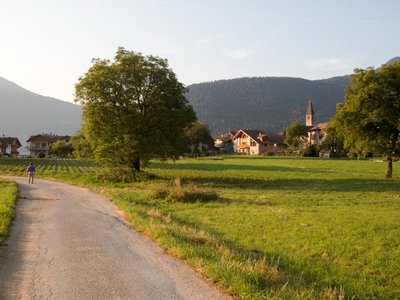
The panelists presented various practical examples: Philipp Schrögel introduced the “Heimspiel Wissenschaft” project. In this initiative, researchers return to their hometowns and speak about their work there—for example, in clubhouses or community centers. The goal is to ensure that science does not appear as something “coming from the outside,” but rather to create personal points of access. Schrögel emphasized that traditional science events often reach an older, academically oriented audience, while many segments of the population remain excluded. Formats like “Heimspiel Wissenschaft” are intended to break down these barriers and open up new spaces for dialogue.
Ursula Liebmann from the Austrian Library Association spoke about the role of public libraries as social and consumption-free meeting places. Libraries today are far more than mere lending facilities: they offer space for workshops, lectures, discussions, and citizen science projects, thereby reaching very diverse target groups. Especially in rural areas, libraries can be important places for exchange, knowledge transfer, and social participation.
Robert Obermeier presented the “Places of Remembrance” project, which brings regional remembrance culture to light. Temporary memorial sites commemorating the resistance against National Socialism are being created in several districts of Salzburg. The project combines historical research, public art, and educational outreach with schools and communities. Obermeier described how important collaboration with local initiatives, museums, and communities is for jointly addressing sensitive historical topics and actively involving local people.
Eveline Selberherr presented her Sparkling Science project “Micro Tramper,” which pioneers new approaches to science communication in rural areas. She and her team deliberately go where people naturally gather—such as at regional events, trade fairs, or livestock markets. There, science is communicated in an accessible and relatable way. The goal is to engage with people who often would not attend traditional science events.
Overall, the discussion showed that successful science communication in rural areas relies above all on personal interactions, regional roots, and formats that are relevant to everyday life. The key, it was noted, is not merely to convey scientific information, but to create spaces for exchange, participation, and shared learning.
A recording of the event is available here for viewing.