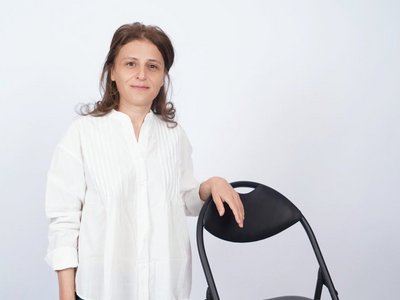
The dissertation, titled ‘The Impact of International Labor Migration on Social and Power Relations within Households in Rural Armenia: A Case Study from Geghatesil Village’, was completed in September 2025 at the University of Vienna, Department of Social and Cultural Anthropology, under the scientific supervision of Dr. Patricia Zuckerhut.
Sinara’s research led the way in recognizing the importance of including gender into both migration courses and migration research at her home university - Yerevan State University. At the institutional level, two major shortcomings continue to characterise migration studies. First, despite longstanding feminist critiques, migration research remains largely gender-blind. Second, studies that address gender and migration tend to focus primarily on women as migrants, devoting limited attention to those who stay put and rarely integrating age, class, and other socially constructed categories as key axes of differentiation. Challenging the notion of a universal category of “women,” her research adopts an intersectional approach, demonstrating that gender alone is insufficient to capture the diverse experiences of women, particularly those who remain in place. Simultaneously, she critiques the category of “left-behind” women, employing the concept of “staying put” to frame it as an “active process of making ends meet after others have left” (drawing on anthropologist Madeleine Reeves).
By introducing these perspectives, her research strengthens both the analytical and teaching capacities of her home institution. It expands migration research and curricula to include the often-overlooked experiences of women who stay put, promotes a more comprehensive and inclusive understanding of migration processes, encourages interdisciplinary collaboration, and supports the development of gender-sensitive and intersectional approaches in both research and teaching.
This PhD research is also highly relevant to Armenia’s development, as it reveals how gendered labour arrangements shaped by seasonal migration sustain rural communities and underpin an important segment of the national economy. The dissertation demonstrates that income earned by men working in Russia provides essential financial resources that are largely unavailable locally due to the scarcity of well-paid employment. At the same time, those who stay put in the village—predominantly women—engage not only in social reproduction but also in agricultural, farming, and low-income economic activities that sustain everyday life and enable households to save and later invest remittances in housing, children’s education, and significant social events. As a result, the sustenance of village life and the broader rural community is made possible through the interplay between migration and the local socioeconomic system that supports it.
By analysing these dynamics, the research makes visible the crucial role of women’s productive and reproductive labour, which is often overlooked yet fundamental to both household functioning and economic resilience. Given that remittances constitute a significant component of Armenia’s national income, understanding how they are generated, saved, and utilised offers important insights for national development strategies. The research therefore provides valuable evidence for shaping policies in rural development, migration management, gender equality, and social protection—areas central to Armenia’s long-term socioeconomic development.
Abstract of thesis
A substantial number of Armenian men, especially those from rural areas, seasonally migrate abroad searching for better living conditions for themselves and their families. This dissertation focuses on the impact of male seasonal labor migration on social and power relations within households in rural Armenia. Taking into account the ‘patriarchal’ nature of Armenian society, it analyzes the impact of seasonal labor migration on the rural households in the pseudonymous village of Geghatesil, in the Gegharkunik region of Armenia.
Gegharkunik, a region in the eastern part of Armenia surrounding Lake Sevan, has the highest rates of labor seasonal out-migration in the country. On average, migrants are between 20 and 50 years of age. There is a well-developed seasonal pattern of migration in this region, and in Geghatesil village, mostly to Russia, with some also migrating to other countries within the Commonwealth of Independent States (CIS). Migrants leave from March to May for work in construction and return between the months of October and December.
However, as a concrete manifestation of globalization trends, migratory movements affect the lives of a growing number of men and women in a variety of ways. In Armenian society the ‘appropriate’ roles for men and women, historically, are quite rigid and defined by the influence of ‘patriarchal’ traditions. Men are usually considered the head of the household and take on the role of working outside the home to support the family. Women are responsible for maintaining the home and children. Therefore, Armenia is an especially suitable site to study the effects of migration on rural households due to its classically ‘patriarchal’ gender relations and high levels of labor out-migration.
By exploring the experiences of ‘staying put’ ‘not just as a residual category but as an active process of making ends meet after others have left’ (Reeves 2011:557) the author argues that staying put women’s experiences are far from uniform: the degree to which male absence was experienced as (dis)empowering varied considerably depending on women’s age, position within the household, composition of the household and other socially constructed categories.
Narrative biography
Sinara Navoyan earned her MA and BA in Sociology from Yerevan State University. She has conducted several research projects on gender at the Yerevan State University Center for Gender and Leadership Studies (CGLS), including presenting her work on “Women’s Leadership in Armenia: Barriers to Gender Equity and Female Empowerment” at the Women’s Leadership Program partners meeting in Kigali, Rwanda, with delegates from Rwanda, South Sudan, Paraguay, Armenia, and the U.S.
She attended the LOVA International Summer School, “Unschooling the Anthropologist,” in Amsterdam, Netherlands, organized by the Netherlands Association for Gender Studies and Feminist Anthropology. She was an Academic Visitor at the Centre on Migration, Policy and Society (COMPAS), University of Oxford, as a Marietta Blau Fellow, and a Visiting Researcher at the Swiss Forum for Migration and Population Studies (SFM), University of Neuchâtel, Switzerland, supported by a research grant from the Academic Swiss Caucasus Net (ASCN) Short-Term Grants Programme.