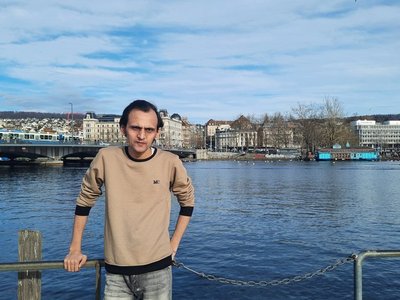
As part of his doctoral journey, Dr. Muhammad Asif undertook a six-month research stay at the Department of Botany and Biodiversity Research, University of Vienna, under the academic supervision of Prof. Dr. Irmgard Krisai-Greilhuber. This research visit was made possible through the generous support of the Austrian Agency for Education and Internationalisation (OeAD), funded by the Austrian Ministry of Women, Science and Research.
During his stay, Dr. Muhammad Asif had the opportunity to advance his expertise in integrative taxonomy, DNA sequencing, and multigene phylogenetic analyses, while engaging in productive academic exchange at one of Europe’s premier institutions for biodiversity research. His collaborative work with Prof. Greilhuber and her team focused on the classification and phylogenetic placement of macrofungi collected from southern Punjab, Pakistan.
The collaboration has already led to a successfully published joint research article “Integrative taxonomy and multigene phylogeny uncover three novel taxa of the genus Clitopilus from southern Punjab, Pakistan”, with several other publications in the pipeline. These research outputs not only contribute to the global scientific literature but also help strengthen academic partnerships between Pakistan and Austria. The tools, knowledge, and experiences gained during his stay are now being utilized at Dr. Muhammad Asif’s home institution, where he is actively involved in capacity building and mentoring young researchers in the field of mycology.
Personal and Professional Impact
Dr. Muhammad Asif’s research stay in Austria has had a transformative impact on both his personal and professional development. Professionally, he benefited from access to advanced molecular laboratories, cutting-edge analytical tools, and a vibrant, interdisciplinary research environment that significantly broadened his scientific perspective. Personally, the experience boosted his confidence as an independent researcher and provided a strong foundation for future international collaborations and postdoctoral research opportunities. Upon returning to Pakistan, he brought with him innovative ideas, refined methodologies, and a strengthened vision for his academic future.
Intercultural Experiences
Living and working in Vienna offered Dr. Muhammad Asif a rich intercultural experience. Interacting with colleagues from diverse academic and cultural backgrounds deepened his appreciation for global diversity in science and beyond. Participation in seminars, collaborative research discussions, and cultural activities helped him better understand European academic culture and build lasting professional and personal relationships.
Life Changes and Influences
Dr. Muhammad Asif’s time in Austria has left a lasting imprint on his academic path and worldview. It underscored the value of international collaboration in solving shared scientific challenges and inspired him to take a more active role in fostering research development in Pakistan. He now sees himself not only as a scientist but as a connector between local biodiversity knowledge and the broader international scientific community.
Dr. Muhammad Asif extends his sincere gratitude to OeAD, Prof. Dr. Irmgard Krisai-Greilhuber, and the University of Vienna for their generous support and mentorship. His research stay has enriched his academic journey and will continue to influence his contributions to fungal biodiversity and environmental research for years to come.
Research background
Dr. Muhammad Asif recently completed his PhD thesis in Plant Sciences/Mycology from Quaid-i-Azam University, Islamabad, Pakistan. His academic and research interests lie at the intersection of fungal taxonomy, ecology, and molecular phylogenetics, with a strong focus on documenting macrofungal diversity from underexplored ecosystems. He is deeply committed to uncovering fungal biodiversity and contributing to global fungal databases through comprehensive morphological and molecular investigations. His academic career has already led to several research publications in peer-reviewed journals, with many more currently under review or in preparation.
Dr. Muhammad Asif’s doctoral research, titled "An Integrated Approach to Unravel the Diversity and Distribution of Mushrooms in Southern Punjab, Pakistan," employed a suite of morphological, anatomical, and molecular techniques, including ITS, SSU, 28S, TEF1-α, and RPB2 sequence analyses to describe and classify a wide range of mushroom taxa, including numerous species new to science, from an unexplored and mycologically neglected region, southern Punjab, Pakistan. His integrative approach provided valuable insights into the richness of fungal life in a region previously overlooked in scientific studies. He also utilized advanced tools such as scanning electron microscopy and multigene phylogenetic analysis to investigate the evolutionary relationships among taxa. In addition to taxonomy and systematics, Dr. Muhammad Asif is keenly interested in applying fungal biodiversity research to conservation, ecological assessments, and environmentally sustainable solutions such as mycoremediation.