
APPEAR 15+2 Anniversary Event
Thursday, 28 May 2026, 14:00
K47, Franz-Josefs-Kai 47, 1010 Vienna
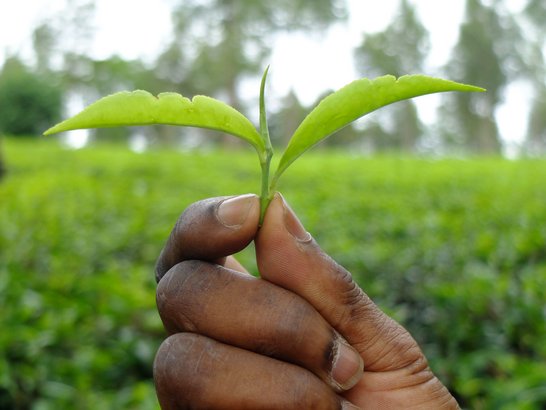
Launched at the end of 2009, APPEAR has taken many of us on an ambitious journey to new horizons in development policy, generating innovative scientific insights and fostering long-standing partnerships. Over the years, cooperation in research, teaching and management between higher education institutions in Austria and in APPEAR partner countries has fostered a community that brings together development policy concerns and the objectives of the SDGs with academically excellent research and sustainable solutions to improve social, cultural, ecological and economic living conditions. At the anniversary event, we would like to reflect and discuss, review achievements, and look ahead together.
Programme
14:00 Arrival of Guests | Refreshments
14:30 – 16:00 Welcome and Review
Facilitator: Stella Asiimwe
- Welcome and Introductory Remarks, ANDREAS OBRECHT, OeAD
- Project Presentation: Clean and Prosperous Uganda – Fecal Sludge and Solid Waste Management for Improved Livelihoods| CPUg, JENINAH KARUNGI, Makerere University
- Project Presentation: Strengthening Research and Educational Competences of HEIs for Gender sensitive Urban (InfoRmal Settlement) Transformation | GIRT, ELISABETH HUBER, University for Continuing Education Krems
- Presentation of the Evaluation Results, JULIANE LÖW, CEval GmbH
- APPEAR in Context: Shaping Higher Education Cooperation – Strategic Relevance and Future Perspectives, CLAUDIA ZINGERLI, ETH Zürich
16:00 – 16:30 Coffee Break
16:30 – 17:30 Metareflections on APPEAR: Experiences and Perspectives
- Presentations by VIOLET KISAKYE, Mountains of The Moon University, Uganda, TIGRAN KERYAN, BOKU University and MILENA KLIMEK, BOKU University
- Synthesis Commentary on the Presentations, MICHAEL HOLLÄNDER, GIZ
17:30 – 18:00 Break
18:00 – 18:30 Opening of the Evening Reception
Facilitator: Maiada Hadaia
- Video Message by BEATE MEINL-REISINGER, Austrian Federal Minister for European and International Affairs (tbc)
- ALEXANDER KARNER, HEAD OF UNIT, THEMES AND QUALITY, Austrian Development Agency (ADA)
- ULRICH HÖRMANN, Head of Finance and Authorised Signatory, OeAD
- STEFANIE LEMKE, BOKU University
- CAROLINE PAPARU, Muni University and BOKU University
Music by CHRISTINA ZURBRÜGG
18:30 – 21:00 Reception and Networking
The programme may be subject to alterations.
Registration closed
Speakers:
Andreas J. Obrecht is a social and cultural anthropologist, writer and sociologist; assistance professor at the Institute of Sociology, University of Vienna (1988‐1993); habilitation in sociology with an emphasis on developmental sociology (1997); head of the Interdisciplinary Research Institute for Development Cooperation (IEZ), Johannes Kepler University Linz (1998‐2009); visiting professor for the thematic focus Sub‐Saharan Africa and South Pacific at the Department for Contemporary History, Karl Franzens University Graz (1998‐ 2013); since 2004 host for science and culture in the ORF‐radio broadcast „Von Tag zu Tag“, “Punkt Eins”, “Im Gespräch”; since 2010 head of the “Austrian Partnership Programme in Higher Education and Research for Development” and head of the section “Science and Research for Development Cooperation” at Austria’s Agency for Education and Internationalisation (OeAD).
Jeninah Karungi-Tumutegyereize is a Professor in the College of Agricultural and Environmental Sciences, Makerere University (Uganda). She has a BSc. Agriculture (1997), MSc. Crop Science (1999) and a PhD in Agricultural Science (Crop Entomology, 2007). She is an alumna of Makerere University, Imperial College of London (former Wye College), and Swedish University of Agricultural Sciences (SLU). Her research engagements span the areas of pest management, agroecology, crop protection, waste utilisation, insect ecology, pesticide usage and safety, seed quality, and participatory research. She is a recipient of the prestigious International Integrated Pest Management Excellence award; Young Affiliate Fellow of the Academy of Sciences of the Developing World (TWAS), and Fellow, Uganda National Academy of Sciences.
Elisabeth Huber is an anthropologist and sociologist having completed her PhD thesis on urban pollution and poverty in Mali and Burkina Faso. Her work experience at universities in Berlin, Bremen and Vienna relates to data management, research ethics and data archiving. For the project GIRT, she worked at the University for Continuing Education Krems with an interdisciplinary team of four partner universities in Ethiopia and Mozambique on the nexus of women’s livelihoods, infrastructure and basic services and tenure security.
Juliane Löw is an evaluator at CEval GmbH, a private research, service, and educational institute in the field of monitoring and evaluation that originated at Saarland University. Prior to her work at CEval, Ms. Löw worked at the World Bank’s Development Impact Evaluation (DIME) department and the Corporate Evaluation Unit of Deutsche Gesellschaft für Internationale Zusammenarbeit (GIZ) GmbH. Her professional experience, combined with her method-focused studies, makes her a specialist in the design, implementation, and steering of high-quality evaluations in the fields of development cooperation, higher education, social affairs, and sustainability. She holds a Master’s degree in International Development from the Institut d’Études Politiques de Paris (Sciences Po) and a Master’s degree in Political Science from the University of Freiburg, as well as a Bachelor’s degree in Latin American Studies from the University of Cologne.
Claudia Zingerli is Head of ETH Sustainability at ETH Zurich, freelance consultant and board member of the Swiss Academic Society of Environmental Research and Ecology and of Sahee Foundation (sustainability for agriculture, health, environmental education). Between 2014 and 2022 she was scientific coordinator of the SDC-SNSF r4d programme (Swiss Programme for Research on Global Issues for Development) and the Solution-oriented Research for Development (SOR4D) programme at the Swiss National Science Foundation. Previously, she was a senior scientist and lecturer at ETH Zurich and the University of Zurich, Switzerland. In her academic work, she focuses on the political nature of natural resource management as well as the politics of knowledge in international development. She managed research projects in the Philippines, Vietnam, Bolivia, and Switzerland. She holds a MA in geography, social anthropology and economics from the University of Basel, Switzerland, and Freiburg im Breisgau, Germany, and a PhD in development studies from the University of East Anglia, UK.
Violet Kisakye is an Associate Professor in the Faculty of Agriculture and Environmental Sciences at Mountains of the Moon University. She specializes in sustainable agriculture and water resources management, with a strong focus on climate resilience. She earned her PhD in Engineering Science (Water Resources) from KU Leuven, Belgium in 2018. She has previously coordinated two APPEAR funded projects that focused on institutional and community capacity building for Agroecology in Uganda between 2017 to 2025.
Tigran Keryan is a postdoctoral researcher and lecturer at BOKU University’s Institute for Landscape Development, Recreation, and Conservation Planning. His research focuses on transdisciplinary approaches, citizen science, ecosystem services, and nature-based solutions. He aims to bridge science, practice, and policy through collaborative knowledge co-creation for sustainability transformations.
Milena Klimek is a Senior Scientist at the Institute for Development Research at BOKU University. Her teaching, research, and project work focus predominantly on higher education curriculum development and sustainable food and farming systems. She loves using participatory, qualitative research methods to work on co-creating solutions fit for the future. Milena finalized her PhD on the topic of values in farmers markets in Vienna and Minneapolis, Minnesota. She has been involved with APPEAR in 4 different projects in Armenia and Uganda, and most recently with the AMUTI project, working on the governance of natural resources in refugee-host communities in the West Nile region.
Michael Hollaender is Head of Section Education, Vocational Education and Training, Labour Markets at GIZ. Before joining GIZ, he gained experiences in development cooperation as an Integrated Expert in Indonesia, as desk officer for a German private foundation mainly working in India and as a freelance development cooperation consultant. His main fields of expertise are education, governance and rural development. Before entering the field of development cooperation, he researched the post-communist transition to democracy in Eastern Europe as a lecturer at the University of Tübingen, Germany. He is a trained high school teacher with a doctorate in political science.
Alexander Karner is heading the unit of the Austrian Development Agency ADA that provides thematic expertise in support of policy development, programme and project implementation. Before, he worked as Senior Advisor on Sustainable Energy for ADA and, more recently, held the post of Head of Office for Technical Cooperation of the Austrian Embassy in Moldova and Georgia from 2017 - 2024. Before starting to work in the field of Development Cooperation in 2013, he was Managing Director of the Austrian alliance for Renewable Energy and was providing lectures and presentations in the field of sustainable energy e.g. at University Graz, Bauakademie Austria, Energieinstitut Vorarlberg. Throughout his career he has been actively involved in several policy development fora and expert groups. Alex Karner holds an M.Sc. in Applied Geosciences and Natural Resources Management of the University of Leoben.
Ulrich Hörmann has been head of Central Services and Finances at the OeAD since 2009 and authorised representative (Prokurist) since 2016. He has more than 30 years of substantial experience in the field of internationalisation of higher education and joint projects. He served as the Secretary General of the Austrian Ex-change Service (ÖAD, an association of the Austrian universities) from the year 2000 to 2008 after ten years of service in the same organisation first as Head of the Department of Development Cooperation and then as Deputy Secretary General. Ulrich Hörmann has studied social and economic sciences as well as catholic theology.
Stefanie Lemke is head of the Institute of Development Research, BOKU University, Vienna. She applies gender-transformative, intersectional and rights-based approaches in the co-design of transdisciplinary participatory action research on women’s land rights, governance of natural resources, sustainable food systems and livelihoods, and right to adequate food and nutrition.
Caroline Paparu is a PhD student at the Institute of Development Research, BOKU University, Vienna. Her research examines how inclusion is negotiated in the governance of natural resources in refugee-hosting communities in Uganda. She analyzes power dynamics and structural inequalities shaping household-level access, use, and conservation of land, water, and forest resources. Her work employs an intersectional lens and participatory research approaches.
Christina Zurbrügg is known for her blend of singing, rap, and contemporary yodeling with songwriting. Having grown up in the Bernese Oberland, Christina Zurbrügg moved to Vienna after a lengthy stay in South America, where she studied acting and classical singing. She quickly made a name for herself with her musical theater productions about the Spanish poet Federico García Lorca, explored folk music, and directed the documentary film “Orvuse On Oanwe”, followed by her award-winning solo program “Christl’s Wunderwelt.” Christina Zurbrügg has released fifteen music albums to date. Most recently, she released her song album “The Heart is an Eternal Wanderer” and the film “Wundersames Kiental,” which has received several awards at international festivals.
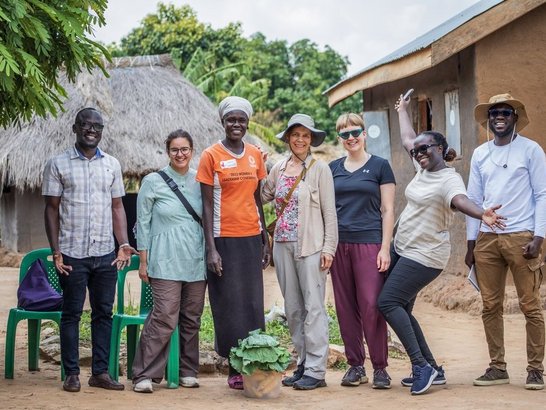
During the first two phases of APPEAR from 2009 to 2020, 43 academic partnerships were implemented in a total of 20 countries. In the third phase, which runs until November 2027, a further 31 partnerships have been established. Overall, throughout the entire programme period, more than 220 students from partner countries have received support to pursue their master’s or PhD studies at an Austrian university.