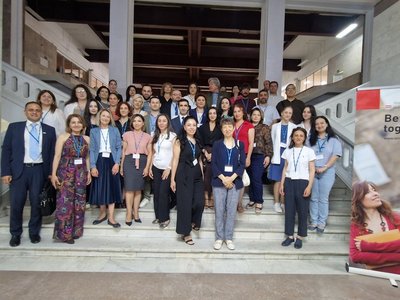
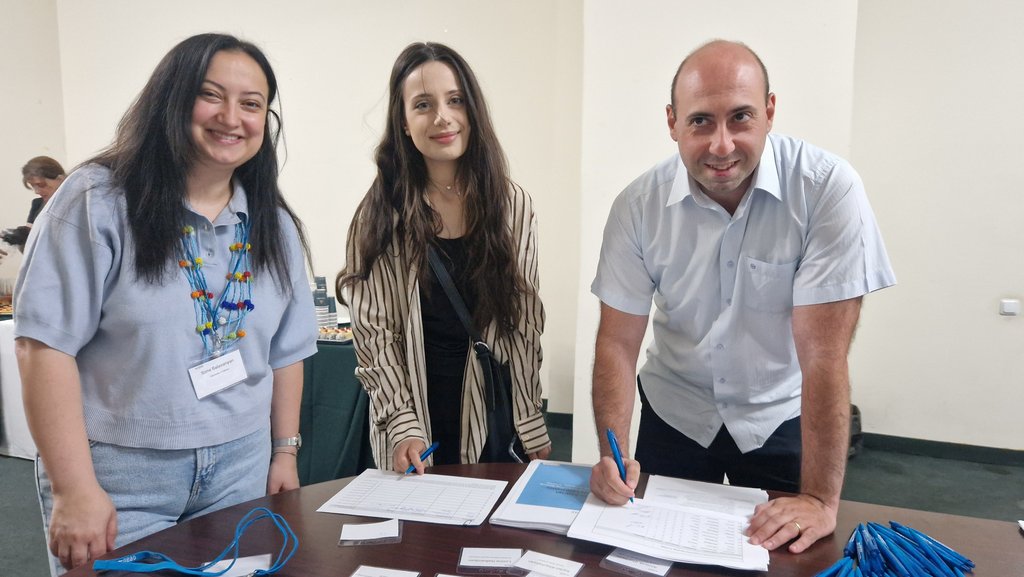
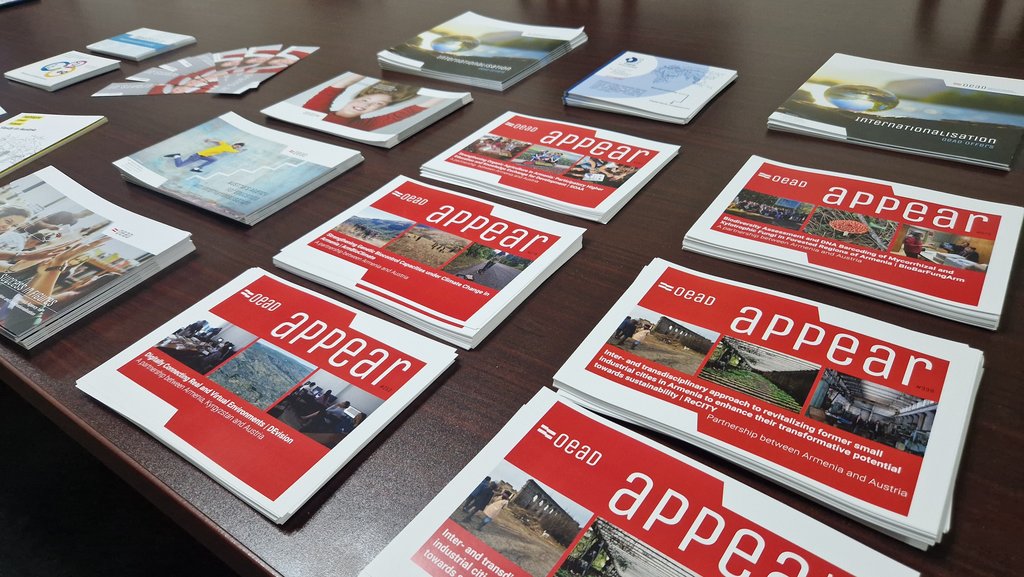
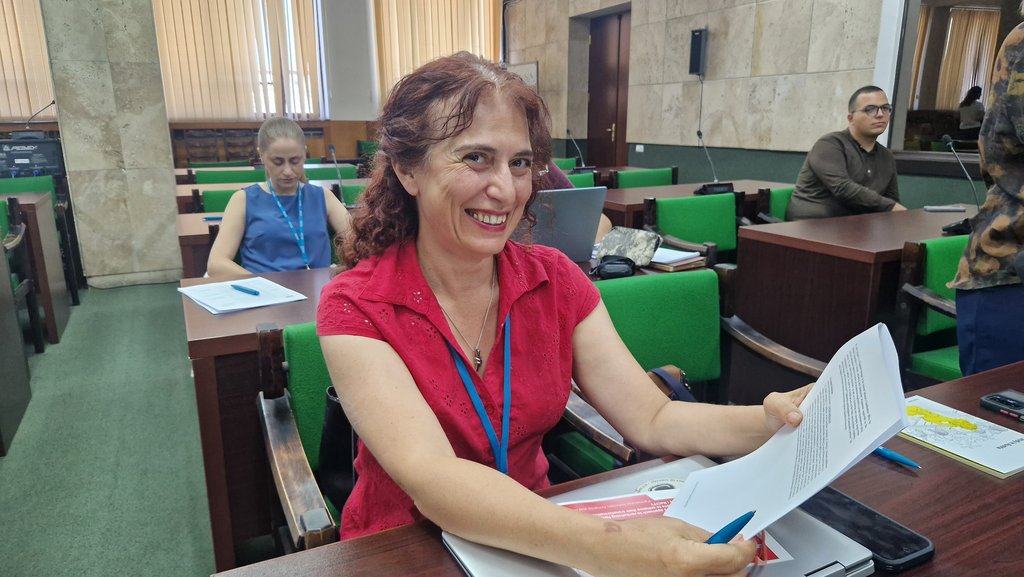
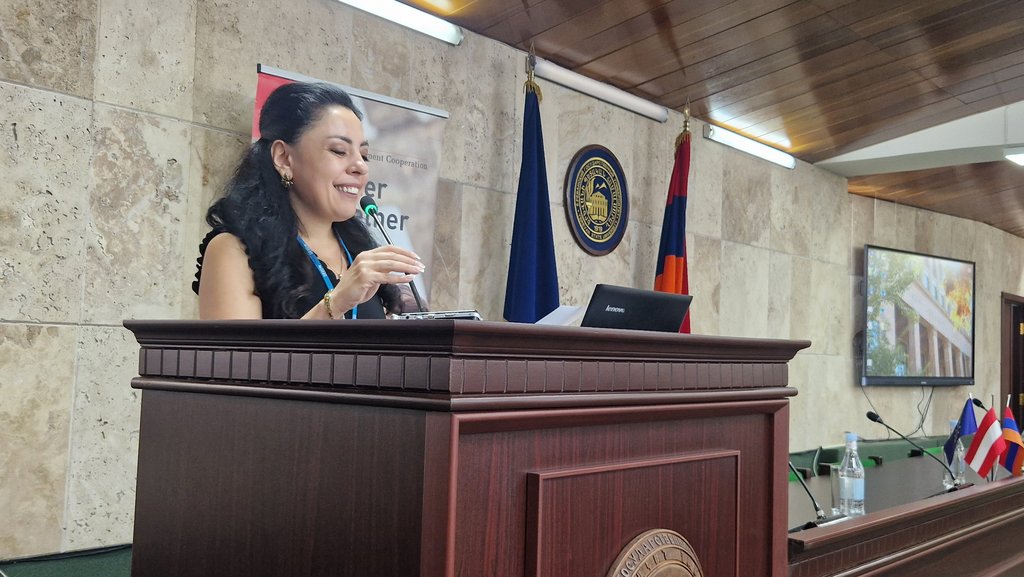
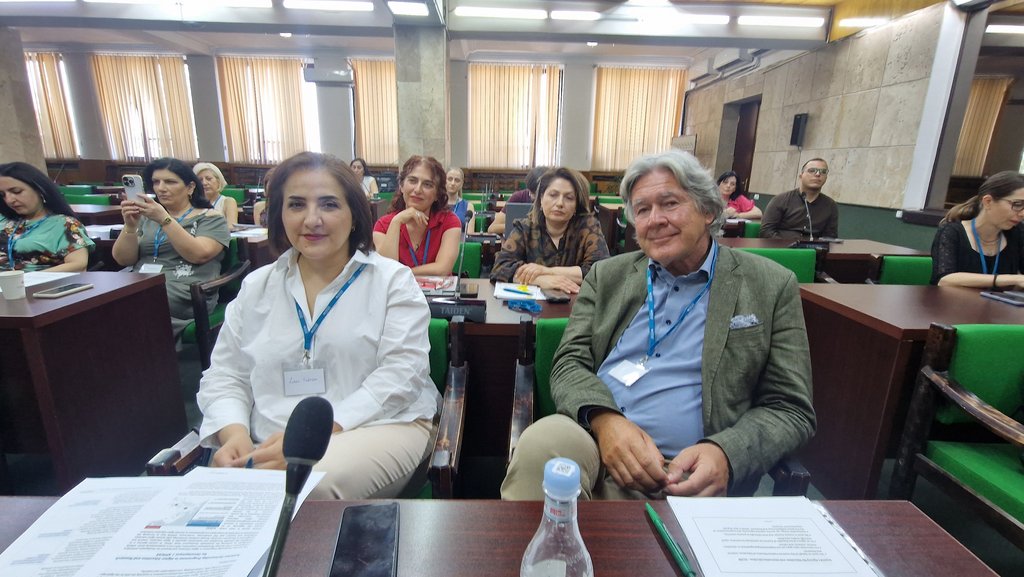
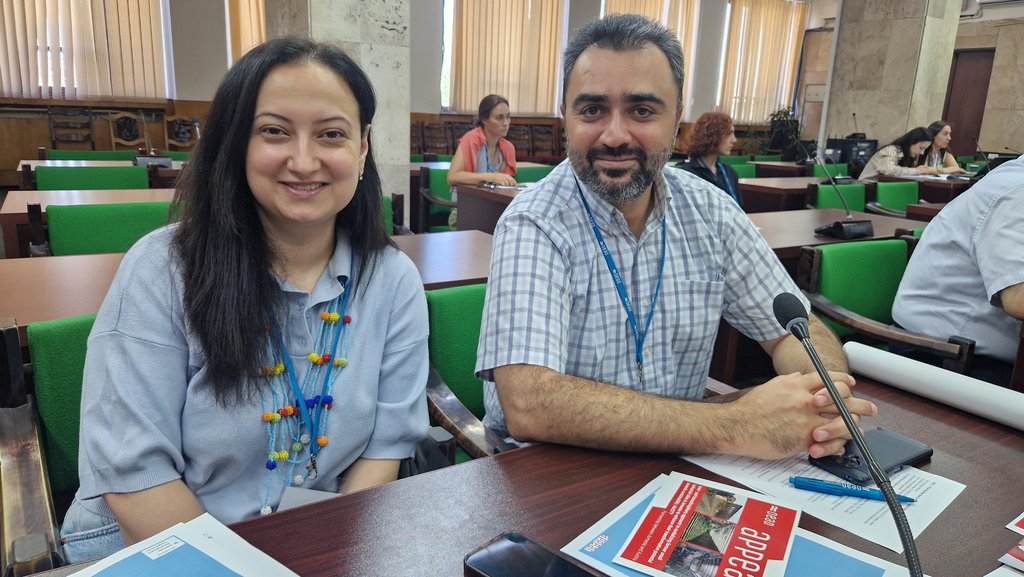
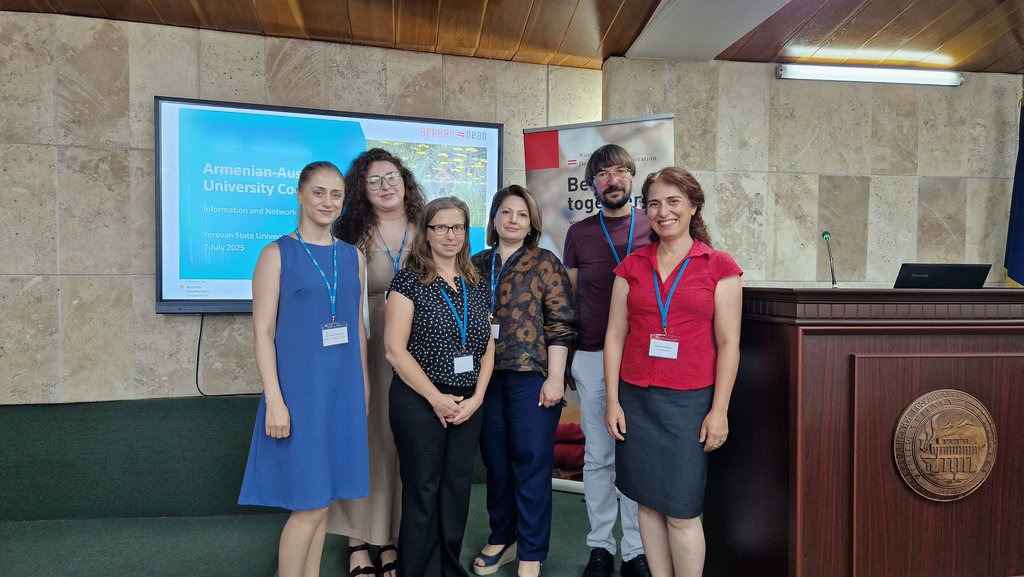
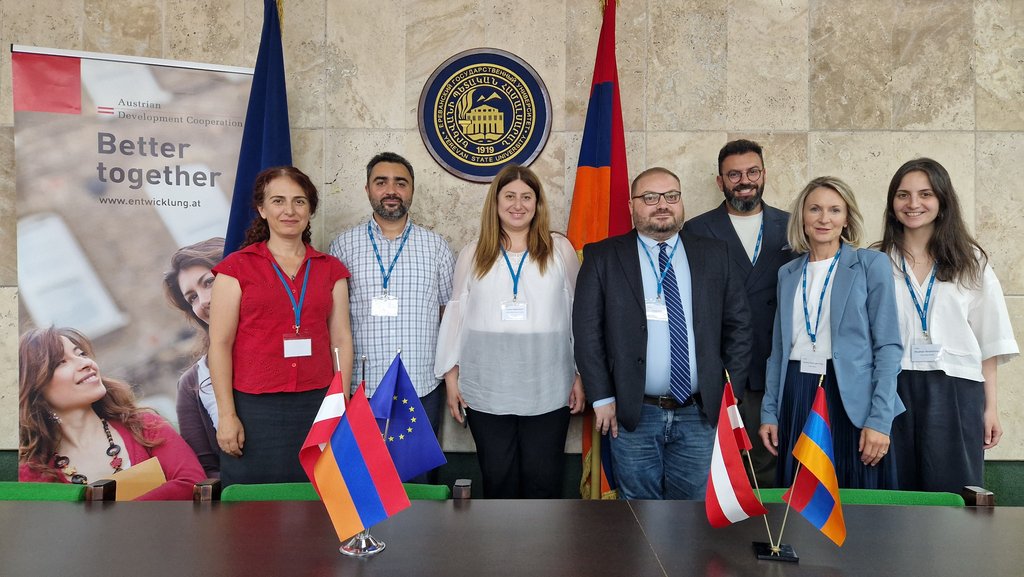
Armenian and Austrian universities share a history of collaboration, resulting in impactful academic, research and capacity-building initiatives. Programmes such as APPEAR, the Austrian Partnership Programme in Higher Education and Research for Development, support joint research, scholarships, and knowledge exchange aimed at addressing both local and global challenges. By strengthening institutional ties and supporting scholars, this cooperation enhances the quality of higher education while promoting sustainable development and innovation in both countries.
These ongoing partnerships reflect a shared commitment to advancing education and research and generating meaningful societal impact as demonstrated through the various project presentations held throughout the meeting on 7 July 2025. The event concluded with a panel discussion featuring APPEAR project partners from various institutions. Speakers reflected on key aspects of international academic cooperation from translating research into policy and practice to building strong, sustainable institutional partnerships. They also explored how cross-cutting issues such as gender mainstreaming and inclusive education could be meaningfully integrated into project design. More information about the speakers can be found in the detailed programme.
Opening and welcome remarks
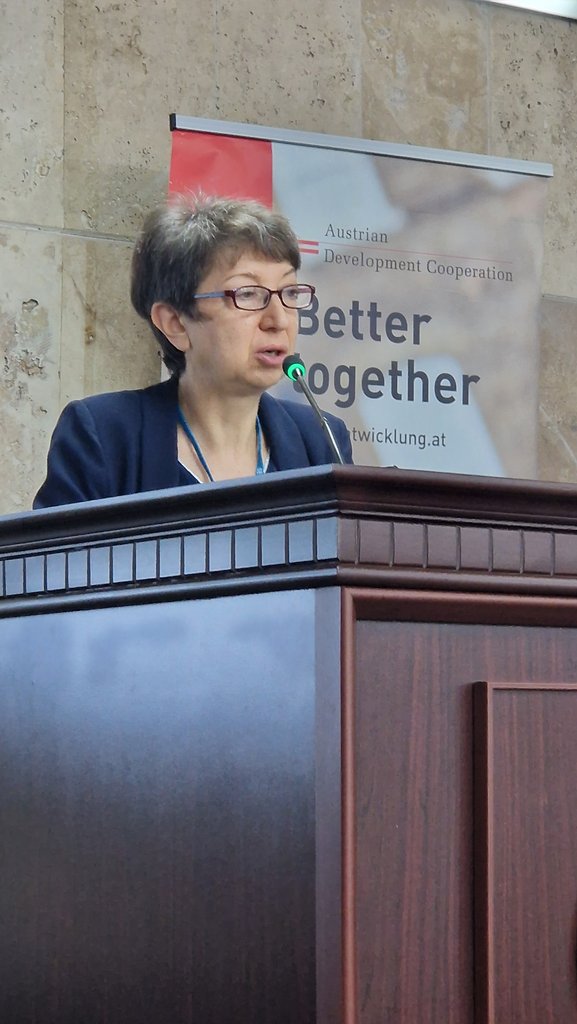
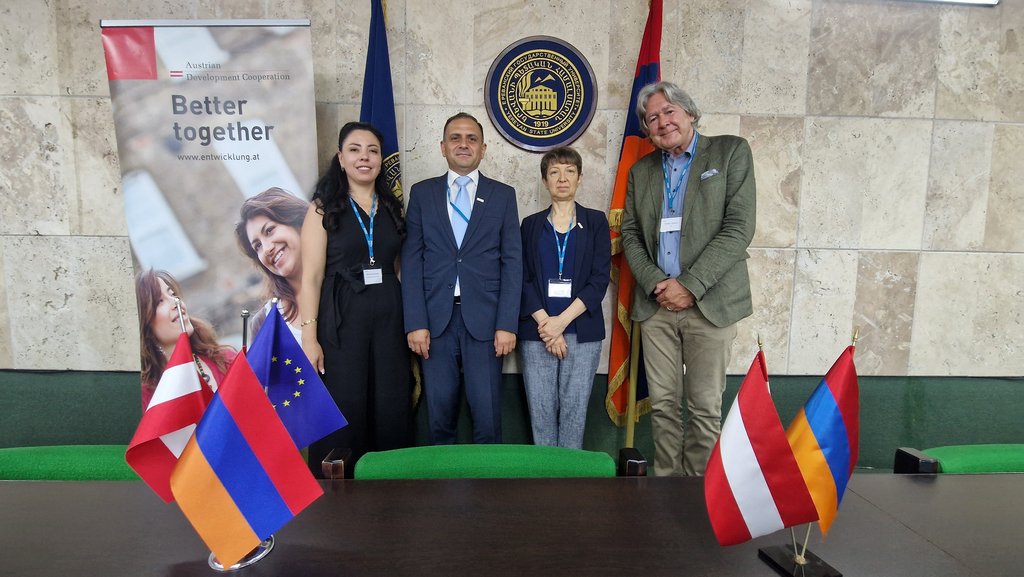
Ms. Nora Alanakyan and Mr. Vahe Sargsyan from the Coordination Office of the Austrian Development Cooperation (ADC) in Armenia opened the meeting with a joint presentation outlining the history, priorities, and current engagement of Austria in Armenia. Ms. Alanakyan provided an overview of the ADC’s institutional presence in Armenia, which began in 2011 when Armenia became a priority country. Initial projects were managed from the South Caucasus office in Tbilisi, followed by the opening of the Yerevan extension office in 2014 and, ultimately, the establishment of the full Coordination Office in 2022. She also highlighted Austria’s longstanding support for Armenia, including humanitarian and infrastructural assistance after the 1988 earthquake. Notable examples include the construction of the "Austrian District" with cottages, a school, a kindergarten and a church, as well as the Austrian Children’s Hospital in Gyumri, which has been operating since 1992. Mr. Sargsyan elaborated on the current strategic priorities of the Austrian Development Cooperation in Armenia, guided by the overarching goal of poverty reduction and resilience-building. Focus areas include sustainable rural development, inclusive local governance, and the empowerment of vulnerable groups such as women and youth. He outlined the instruments used for implementation, including bilateral projects with local and international NGOs, EU-funded initiatives, and academic cooperation through the APPEAR programme.
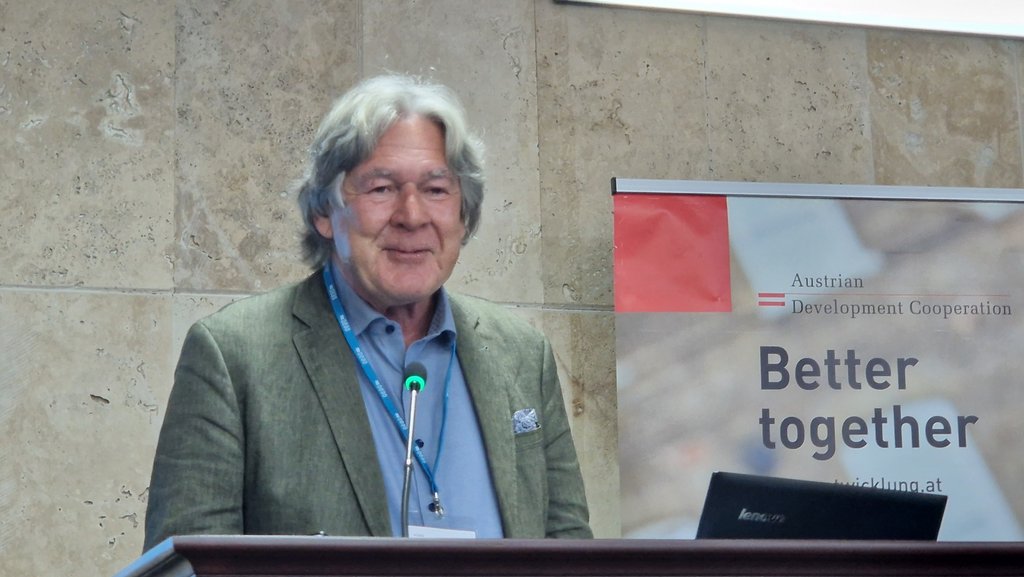
Dr. Andreas Obrecht, Head of the APPEAR Programme at Austria’s Agency for Education and Internationalisation (OeAD), situated in the following presentation the APPEAR programme within the broader work of the OeAD, an agency of the Republic of Austria with more than 60 years of experience in managing education and research programmes worldwide, including Erasmus+ and the European Solidarity Corps. He then provided a comprehensive overview of the programme's strategic orientation, guiding principles and its implementation in Armenia.
Since the start of the second phase of the APPEAR programme in 2015, when Armenia became an eligible partner country alongside Moldova and Georgia, Armenian institutions have demonstrated remarkable commitment and growth in project participation. A total of 5 preparatory fundings and 7 academic partnerships were funded, of which 6 are ongoing partnerships with institutions such as the Armenian National Agrarian University, Yerevan State University, the National University of Architecture and Construction of Armenia, and the National Academy of Sciences.
The programme supports cooperation between Austrian institutions and partners from 11 priority countries, including Armenia.He highlighted the programme’s alignment with the Sustainable Development Goals (SDGs) and its relevance for addressing key societal challenges in each country. The current third phase of APPEAR (2020–2027) is based on a strong commitment to participatory, demand-driven, and context-sensitive approaches. He emphasised the importance of APPEAR alumni for knowledge exchange and sustainable impact, referencing success stories such as that of former scholarship holder Tigran Keryan, whose support was instrumental in organizing the event. He also drew attention to complementary initiatives, including the OeAD Lectureship Programme, which is currently active in Armenia.
Furthermore, he announced that an upcoming case study on Armenian projects will be conducted as part of the external APPEAR programme evaluation. This study will specifically examine the mutual influence between programme design and project implementation in Armenia.
The presentation concluded with an invitation to explore the APPEAR map, which visualises all projects and scholarship holders supported through the programme.
APPEAR project examples
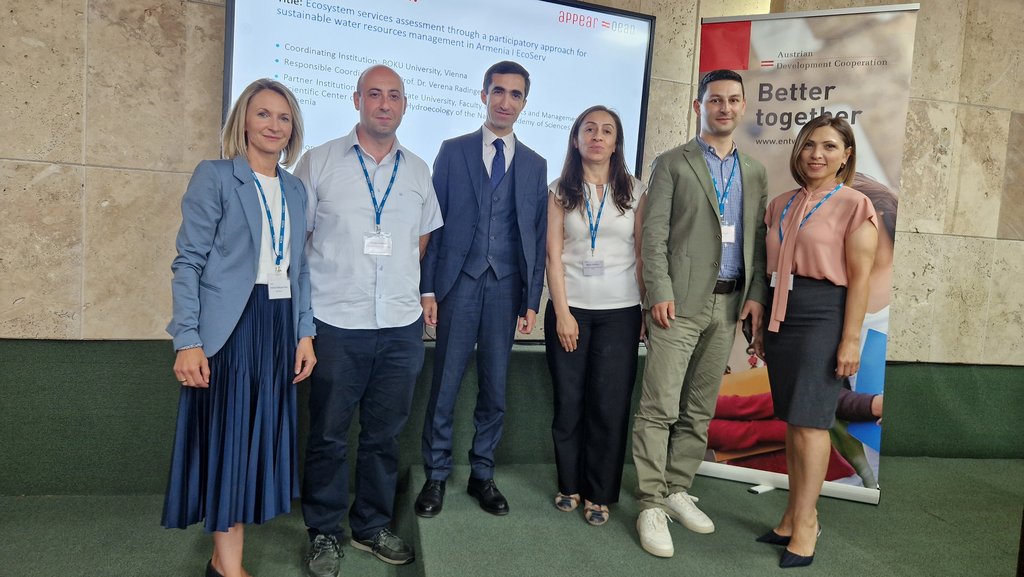
The programme continued with presentations of five APPEAR projects that exemplify the depth and diversity of collaboration between Austrian and Armenian institutions. The speakers explored topics spanning the integration of digital and physical environments, participatory approaches in agriculture and water management, and innovative responses to climate challenges and sustainable urban development. Each presentation demonstrated the potential of applied research to address local needs while contributing to global knowledge.
Dr. Artak Piloyan from Yerevan State University introduced the DEvision Project Digitally Connecting Real and Virtual Environments coordinated by the University of Salzburg and implemented in partnership with institutions in Armenia and Kyrgyzstan (March 2022 to February 2025). The core objective is to promote Digital Earth literacy by embedding digital transformation concepts into education, research, and societal development. As a key output, the project developed five open and modular learning units covering topics such as spatial analysis, remote sensing, and geovisualisation, designed for use in bachelor’s, master’s, and continuing education programmes. Dr. Piloyan emphasised the project’s long-term institutional impact: the DEvision modules have been anchored into curricula at several partner universities, with ongoing use beyond the project's duration. A regional Digital Earth education network has been initiated, supporting further collaboration and knowledge exchange. The project’s outreach efforts included extracurricular courses at YSU’s Centre for Lifelong Learning, public awareness campaigns, scientific publications, and international presentations. DEvision has successfully engaged a wide audience and contributed to building long-term capacity among educators and learners.
Looking ahead, the team plans to expand the programme to additional institutions, enhance local adaptations, and strengthen cooperation with teacher training initiatives, open data platforms, and educational networks.
Ms Lusine Nalbandyan presented the SOAA Project Strengthening Organic Agriculture in Armenia: Participatory Higher Education and Knowledge Exchange for Development, coordinated by Armenian National Agrarian University (ANAU) in collaboration with the BOKU University (March 2022 - May 2025). The project focuses on advancing organic agriculture in Armenia through participatory education, practical training, and institutional development. A central achievement of the project is the establishment of the Akunk Organic Experimental-Demonstrational Farm, which serves as a hands-on learning environment for students and a platform for innovation. Through national TV features, social media outreach, and public events, SOAA has raised significant awareness of sustainable agricultural practices. Ms. Nalbandyan highlighted key educational components, such as the short-term hybrid course ‘Organic Agriculture: From Introduction to Practice’, the first of its kind in Armenia. In terms of impact, SOAA facilitated meaningful academic exchange, contributed to environmental sustainability by reducing chemical inputs and supporting biodiversity; socially, it empowers students and farmers by promoting participatory learning; economically, it builded capacity for a competitive organic agriculture sector and supports rural development.
Looking ahead, the project aims to expand the OAMP (Organic Agriculture Master’s Programme) model to other programmes and institutions, broaden its network of participatory farms, and deepen cooperation across education, research, and policy. SOAA offers a replicable model for advancing resilient and eco-friendly agricultural systems in Armenia and beyond.
Dr. Verena Radinger-Peer from BOKU University introduced the EcoServ Project ‘Ecosystem Services Assessment through a Participatory Approach for Sustainable Water Resources Management in Armenia’, which brings together interdisciplinary teams from Austria and Armenia. The project is coordinated by BOKU and implemented in cooperation with Yerevan State University (YSU) and the Scientific Center of Zoology and Hydroecology (SCZHE) of the National Academy of Sciences of Armenia (March 2023 - February 2027). EcoServ focuses on strengthening ecosystem services literacy and capacity in Armenia through community engagement, higher education reform, and transdisciplinary research. The project’s activities and impacts span eight key areas: 1) Infrastructure and Training Facilities, 2) Community and Stakeholder Engagement, 3) Summer School and Teacher Seminar, 4) Teaching Materials and Curriculum Integration, 5) Methodological Innovation, 6) Sustainable Entrepreneurship Support, 7) Policy Engagement and Scientific Output, 8) Scientific and Policy-Relevant Dissemination. As Dr. Verena Radinger-Peer emphasized in her presentation, EcoServ’s success lies in its interdisciplinary collaboration, shared leadership, and meaningful engagement with local communities and policy actors. The project exemplifies how participatory research, education, and entrepreneurship can contribute to sustainable water management and biodiversity conservation in Armenia.
Looking ahead, the team will build on the lessons learned to enhance future efforts, implement follow-up plans and further initiatives, and pursue opportunities for collaboration with other projects to maximize impact and sustainability.
Dr. Marine Arakelyan presented the ArmBioClimate Project Strengthening Genetic Biocontrol Capacities under Climate Change in Armenia (April 2023 - March 2027). Coordinated by Yerevan State University, the project involves collaboration with Austrian institutions such as the University of Veterinary Medicine Vienna (Vetmeduni), BOKU, and the Medical University of Vienna, as well as Armenian partners including the Scientific Center of Zoology and Hydroecology (SCZHE) and the Institute of Botany of the National Academy of Sciences of Armenia. Key achievements so far include the development and approval of a Master’s programme titled Environmental Protection and Biocontrol, awarding two PhD scholarships, an international summer school, and extensive biological data collection, including the jackal genome. Advanced laboratory facilities have been established at SCZHE and YSU to support these activities. The initiative has a broad impact: students receive specialized training in genomics and bioinformatics; researchers benefit from upgraded infrastructure; institutions see strengthened research and educational capacities; and policymakers gain improved parasite surveillance data and ecological models that support climate-resilient biodiversity and zoonosis management.
Looking ahead, Dr. Arakelyan outlined plans to launch the Master’s programme in 2025–2026, continue collaborative research and publications, expand genomic surveillance and wildlife monitoring, and host annual scientific events. Opportunities for collaboration with other projects and engagement with policymakers remain priorities to integrate genetic biocontrol into Armenia’s national biosecurity strategies.
Ms. Shushan Abrahmyan and Mr. Harutyun Vermishyan introduced the ReCITY Project on Inter- and Transdisciplinary Approach to Revitalizing Former Small Industrial Cities in Armenia to Enhance their Transformative Potential towards Sustainability (March 2024 - February 2027). Coordinated by Yerevan State University, the project involves cooperation with the University of Vienna and the NGO Journalists for Urban Development (JUD). The initiative focuses on revitalizing three former small industrial cities in Armenia — Charentsavan, Stepanavan, and Sisian — through an inter- and transdisciplinary research and action approach aimed at fostering sustainable urban transformation. Key activities completed include field visits, interviews with local stakeholders, archival and desk research, and the development of a communications strategy supported by a bilingual website and social media presence. Tangible outputs consist of spatial and stakeholder maps, interview guides, analytical articles, curriculum support for university programs, and preparations for fellowship schemes and a summer school. The project’s impact is evident in enhanced research experience for students, active involvement of local stakeholders, methodological exchanges between partner universities, and community engagement facilitated by JUD. Long-term benefits include strengthened research capacity, institutional anchoring through integration in relevant academic programs, and sustainable dissemination of findings via the project website.
Looking ahead, plans include further fieldwork, summer school activities in 2026, co-publications, and the launch of fellowships and local workshops. Potential collaborations are envisioned with local NGOs, urban labs, educational platforms, and other EU-funded urban revitalization projects.
Panel discussion - critical insights
Following the lunch break, the programme continued with a panel discussion featuring APPEAR project partners from various institutions, focusing on achieving greater impact through knowledge sharing, collaboration, and expanded partnerships. Speakers reflected on key aspects of international academic cooperation — from translating research into policy and practice to building strong, sustainable institutional partnerships. They also explored how cross-cutting issues such as gender mainstreaming and inclusive education could be meaningfully integrated into project design.
Using and sharing research results
Panelists agreed that research impact depends on collaboration, integration, and communication. Joint projects like EcoServ and DEvision must move beyond academic circles to reach policy, education, and local communities. Dissemination through peer-reviewed publications, conferences, and stakeholder meetings is essential. Universities such as the ANAU play a bridging role between science and government policy.
From research to practice
Speakers emphasized bottom-up, participatory approaches, where researchers co-create solutions with local populations and policymakers. Translating scientific results into accessible language and using education and demonstration sites ensures that findings have real social and environmental value. Practical application, not just theory, was seen as central to research relevance.
Institutionalization and international cooperation
Strong institutional mechanisms and international partnerships (Germany, Austria, France, Estonia, Bulgaria) enhance Armenia’s research capacity in ecology and ecosystem services. Student mobility, summer schools, and joint programmes were identified as key tools for sustaining global collaboration and embedding innovation within local institutions.
Role of young researchers
Young scientists are the drivers of innovation. International scholarships and PhD opportunities help build bridges with foreign universities, while mentorship and institutional support nurture their motivation. Sustaining enthusiasm and creating attractive research careers in Armenia remain priorities.
Artificial Intelligence in Research
Artificial Intelligence (AI) is transforming research but must be used critically and ethically. Panelists agreed AI can assist in data analysis and hypothesis building but cannot replace human skills, creativity, or fieldwork. Universities should teach students to use AI as a tool while maintaining critical thinking and hands-on competencies. Establishing laboratory assistant schools was proposed to address practical skill gaps.
Cross-cutting values: Gender, inclusion & ethics
Discussions moved beyond gender ratios toward inclusive and participatory research. Gender imbalance in academia often stems from cultural and economic factors, though women are increasingly active in environmental and biological sciences. Participants stressed that asking unbiased research questions and avoiding stereotypes are vital ethical obligations.
Research, development and human capacity
The APPEAR programme was commended for effectively linking research excellence with human development. Participants emphasized that sustainable progress depends on investing in education, skills, and institutional capacity, rather than focusing solely on infrastructure. True development, they agreed, lies in empowering people with knowledge and tools, teaching them to fish, rather than giving them fish.
Closing note
The panel concluded that future cooperation should focus on student exchanges, joint lectures, and inter-project collaboration. Research must remain human-centered, inclusive, and socially relevant, integrating knowledge, ethics, and innovation to strengthen both science and society.