Researchers, scientists, and professors from Ethiopia, India, Myanmar, Sri Lanka, the United States, and Europe participated in the workshop. In addition, field excursions for water quality testing, evaporation, soil moisture, and discharge monitoring were conducted. Each participant in the workshop presented their research outcomes. Melsew Amsalu Wubneh presented his research findings titled “Reservoir operational assessment in Lake Tana, upper Blue Nile Basin, Ethiopia. Software trainings were also offered based on the participant's interests, including the SWAT+ hydrological model, CDA (climate data analysis), groundwater vulnerability assessment, and water quality analysis.
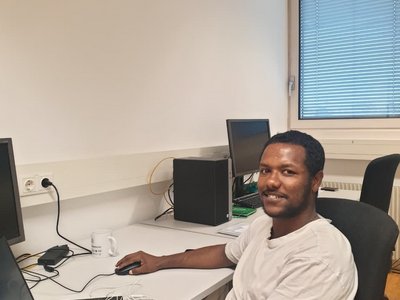
According to Melsew Amsalu Wubneh “the workshop has given me the chance to present my research and to get comments and suggestions and has helped me to make networks with researchers across different countries. In addition, the workshop has helped me to be an advanced user of the SWAT+ hydrological model, which is the model that will be used for my PhD research work.”
Melsew Amsalu Wubneh is a doctoral candidate at the Institute of Soil Physics and Rural Water Management, Department of Landscape, Water, and Infrastructure, University of Natural Resources and Life Sciences Boku, and a lecturer at the University of Gondar, Ethiopia. His PhD research is supervised by Prof. Christine Stumpp and Stefan Strohmeier and funded by the APPEAR programme.
Prior to joining BOKU in 2024, Melsew worked as a lecturer and researcher at the University of Gondar, Department of Hydraulic and Water Resources Engineering. He holds a Master of Science in Hydraulic and Water Resources Engineering from Bahir Dar University (Ethiopia) in 2020 under the collaborated fund of the University of Gondar and the Ministry of Education.