Around 40 participants joined from at least twelve countries, bringing expertise from various areas of education. A wide range of perspectives was represented—from schoolteachers and facilitators in museums and science centres to project managers and representatives of educational authorities. All of them had already implemented citizen science in educational settings in their work and were therefore able to contribute first-hand experience.
The aim of the workshop was to identify the technical, organisational, or structural challenges that limit citizen science in education, as well as the solutions that education experts would like to see. This information feeds into the conceptual development of a future citizen science research infrastructure, which is being developed within the Horizon Europe project RIECS-Concept (Towards a pan-European Research Infrastructure for Excellent Citizen Science). Within the project, OeAD holds primary responsibility for organising the exchange with the education sector.
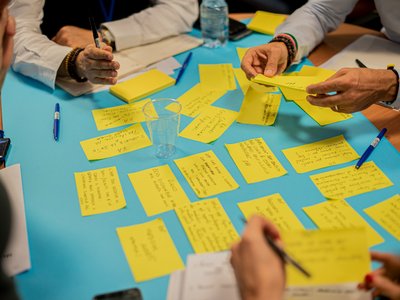
Participants first received an introduction to RIECS-Concept and the project goals. This was followed by co-creative work in thematic small groups. Participants from schools, higher education, non-formal education, and education policy each compiled and prioritised the most urgent challenges. During the subsequent brainstorming on possible solutions, various aspects emerged that will be central for a research infrastructure: the provision of low-threshold educational materials, support with data protection and technical equipment, and increasing the visibility of suitable citizen science initiatives were just some of the ideas. These results will now be processed by the project team and will provide important guidance for further work. Additional workshops will be held to further develop the ideas contributed by the education sector.
OeAD has also already conducted several RIECS-Concept workshops with Austrian citizen scientists and researchers to include their perspectives as well. The thirteen project partners from eight European countries are currently working to develop the most holistic possible understanding of the needs the citizen science community has for a research infrastructure.