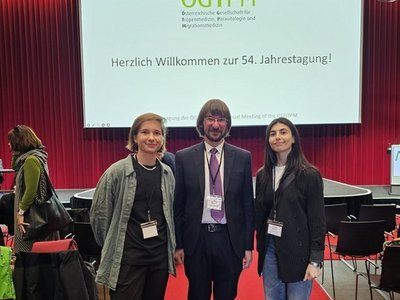
Iuliia Nosulia gave a talk at the ÖGTPM Annual Meeting held in Graz, Austria from 27–28 November 2025, focusing on DNA-based (PCR) detection of gastrointestinal parasites in golden jackals (Canis aureus) from Armenia. The presentation highlighted the first molecular results on the identification of intestinal parasites in this host species.
Golden jackals frequently live in close proximity to humans, pets, and livestock, creating conditions that can facilitate the transmission of parasites between wildlife and domestic animals, with potential implications for public health. Within the framework of the APPEAR ArmBioClimate project, the digestive tracts of 30 golden jackals from Armenia were examined. Parasites were initially detected using classical parasitological methods, including dissection and microscopy, and species identification was subsequently confirmed using DNA-based techniques (PCR and sequencing). This study provides the first DNA-confirmed records of several intestinal helminths in Armenian golden jackals, including species of relevance to animal health and with potential zoonotic importance. The findings underscore the value of a One Health approach to parasite monitoring in regions where wildlife, domestic animals, and humans coexist closely.
The conference featured numerous informative parasitology presentations, including a contribution by the PhD scholar Seda Adamyan, whose research also takes place within the ArmBioClimate project. In addition, discussions with fellow researchers proved valuable for refining data interpretation and defining future research directions.
Iuliia Nosulia is a veterinarian and PhD student who began doctoral studies at the University of Veterinary Medicine Vienna in June 2025 under the scientific supervision of Dr. Pamela Burger. The PhD research focuses on parasite surveillance in Armenian golden jackals, with the aim of characterizing parasite diversity and investigating how host immune responses and environmental factors can be used to identify high-risk areas and predict spatial and temporal patterns of infection. The broader research interests lie in parasitology, with particular emphasis on zoonotic and environmental aspects of parasitic infections, immune-genetic responses of hosts, and landscape genetics.