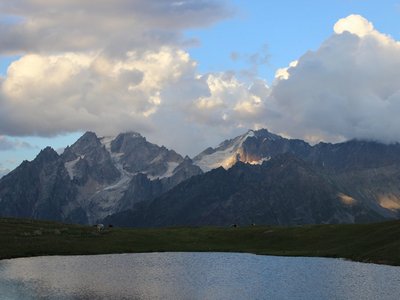
The ReMoDe (Resilient Mountain Destinations) project, a collaborative initiative between the University of Innsbruck (Austria) and Tbilisi State University (Georgia), has successfully concluded its inaugural year with promising achievements in enhancing crisis resilience in mountain tourism destinations across the Alps and the Caucasus.
Focusing on the regions of Kaunertal (Austria) and Mestia (Georgia), the project has brought together tourism professionals, local authorities, and community stakeholders in a participatory effort to evaluate vulnerabilities and develop tailored resilience indicators. Interactive workshops and mapping exercises have laid the foundation for a robust, science-based framework to assess and strengthen destination resilience against external shocks.
A pivotal moment was the transnational stakeholder workshop held in Austria, where Georgian representatives visited Kaunertal to engage in cross-cultural exchange. This dialogue significantly deepened mutual understanding of regional differences and shared challenges in mountain tourism resilience.
“The enthusiasm and engagement we've seen from stakeholders in both destinations has been remarkable,” noted project lead Sarah Schönherr.
Gvantsa Salukvadze, project co-lead, added: “Their insights are invaluable in ensuring that our resilience framework addresses real-world challenges.”
Informed by scientific literature and stakeholder contributions, the project has made substantial progress in developing a comprehensive set of resilience indicators. These will inform the design of a Digital Monitoring Resilience Platform, a tool to assess and monitor destination resilience over time.
Looking forward, ReMoDe will concentrate on expanding data collection, building a resilience index, and strengthening doctoral programs at both partner universities—ensuring long-term capacity building and international knowledge exchange.
Read more about the ReMoDe project