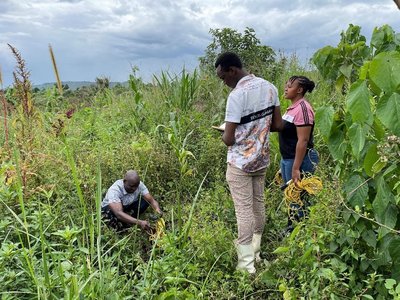
The key highlights achieved in the first year, based on five work packages (WP), include the following: WP1 - Building Partnerships and Capacity: The MSc Curriculum in Environmental Science was developed and submitted to the University Council for approval, and five MSc scholarships were awarded (two full-time students to study in Austria and three MSc research-funded students). WP2 - Characterisation of Heavy Metals at ASGM: A baseline survey and sampling were conducted at selected Namayingo, Kassanda, and Buhweju mining sites. We also collected 65 samples (soil, water, and crops); analysis is underway to establish a contamination baseline. WP3 - Development of Treatment Technology: Feedstocks (e.g., maize cobs, rice husks, banana peels, based on the specific sampling locations) were collected and processed into biochar. Additionally, protocols for biosorbent preparation and testing were established at Gulu University. WP4 - Gender, Diversity, and Inclusion: 347 individuals were surveyed (82 women, 265 men); mining is male-dominated, but women are exposed to mercury, which is used in washing out the gold from the sediment—a role commonly performed by women. Gender-sensitive recruitment for MSc scholarships and project activities was also conducted. WP5 - Dissemination and Visibility: Project posters and oral presentations were delivered locally and internationally (e.g., Kyambogo University, Egypt (2024); IBIC (2024), Italy). Multiple peer-reviewed articles have been published in journals such as Chemosphere and Sustainability. The project was showcased via institutional websites and social media (e.g., Makerere, Gulu). The main challenge in the first year was the delay in fund disbursement, which postponed the start of project activities.
In year two, we will focus mainly on conducting seasonal sampling and performance monitoring of treatment systems involving MSc students. We will also finalise biochar optimisation and pilot treatment units. Additionally, we will strengthen gender-focused interventions and behaviour change campaigns. Dissemination activities will be enhanced through publications, conference presentations, community training, and dissemination via posters, brochures, and workshops.
Project website of BioGold | Biosorption for Sustainable Small-Scale Gold Mining in Uganda | Project341